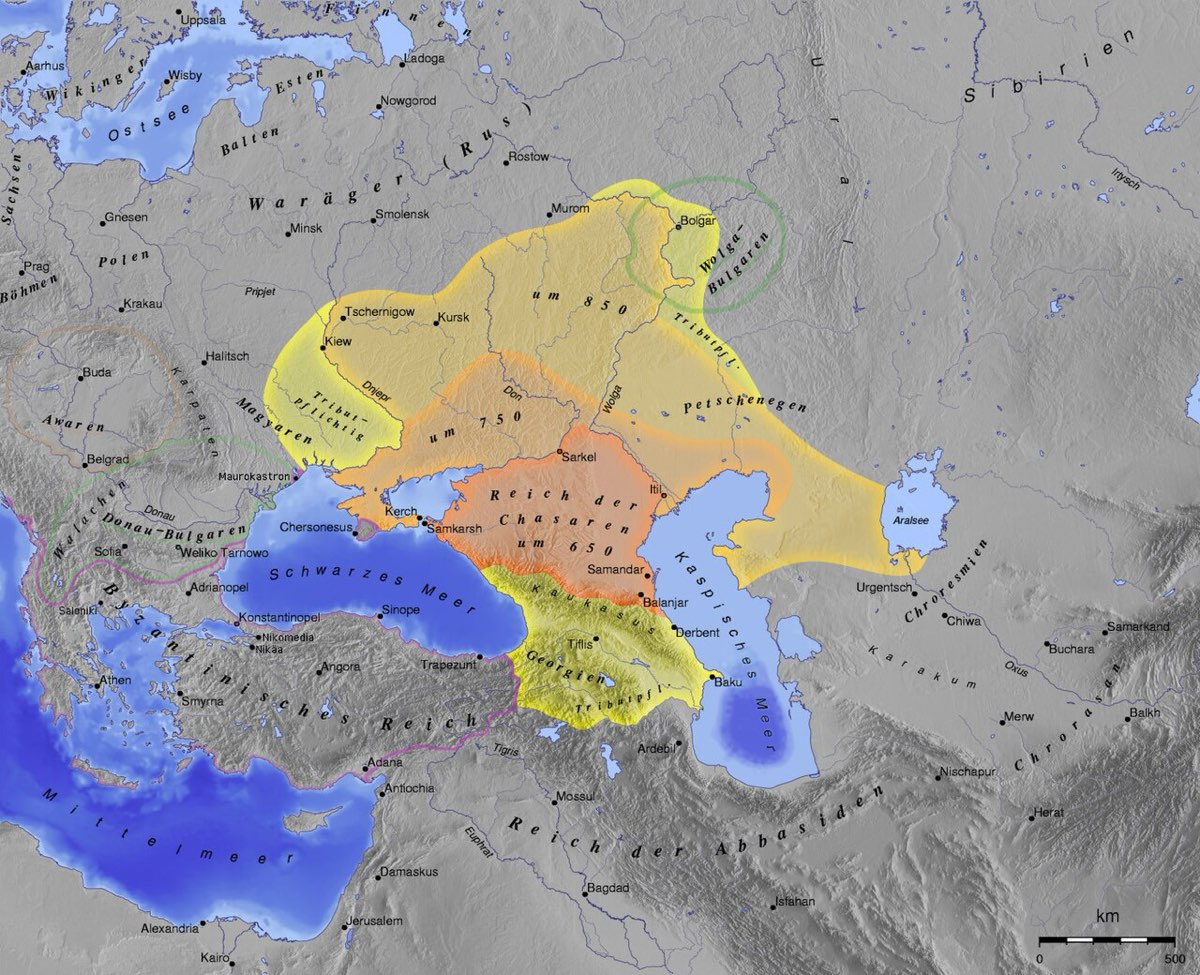
The fields that had been occupied by the Hazars are of geopolitical importance. These were: the fields where the roads of China-Turkisthan-Black Sea- Byzantium- Front Asia- Iran- Harzem- Syria- Mezopotamia- Caucasia-Sharki Europe-Hazar-Scandinavia came together at the river mouths of the four big rivers Idil, Yayık, Kuban and Don (Ten).
All kinds of grains from Kama and the Middle Idil river basin, valuable furs, honey and beeswax, timber, various minerals from south Ural's along the Yayik, silk and cotton wovens from China and Turkmenistan, industrial items from Iran and Byzantium, various items and slaves from Slavia and Scandinavia were brought to the Hazar country. Being an early settled tribe on a route where big land and river-sea trade roads were passing, the Hazars started to support the trade, which had been the main economical element of the government.
Within a very short time various big trade centres-cities had been established; for example: Itil on the river mouth of Idil, Semender and Derbent at the northern Caucasia, Saksin on the river mouth (?) of Yayık, Tamatarhan at the river mouth of Kuban, the Sarkel (Ak-şehir) castle along the river Don are some of the well known Hazarian cities; it is supposed that besides these cities also other big and small cities do exist. A Turkish tribe, that lead city life, that means owning a high material and spiritual civilization, occupied in trade and for the same time caring about their agriculture, that means a tribe that is devoted to their land, was holding by latest VI. Century A.D. the middle and lower parts of Idil, the northern Caucasia and along the river Don in their hands.