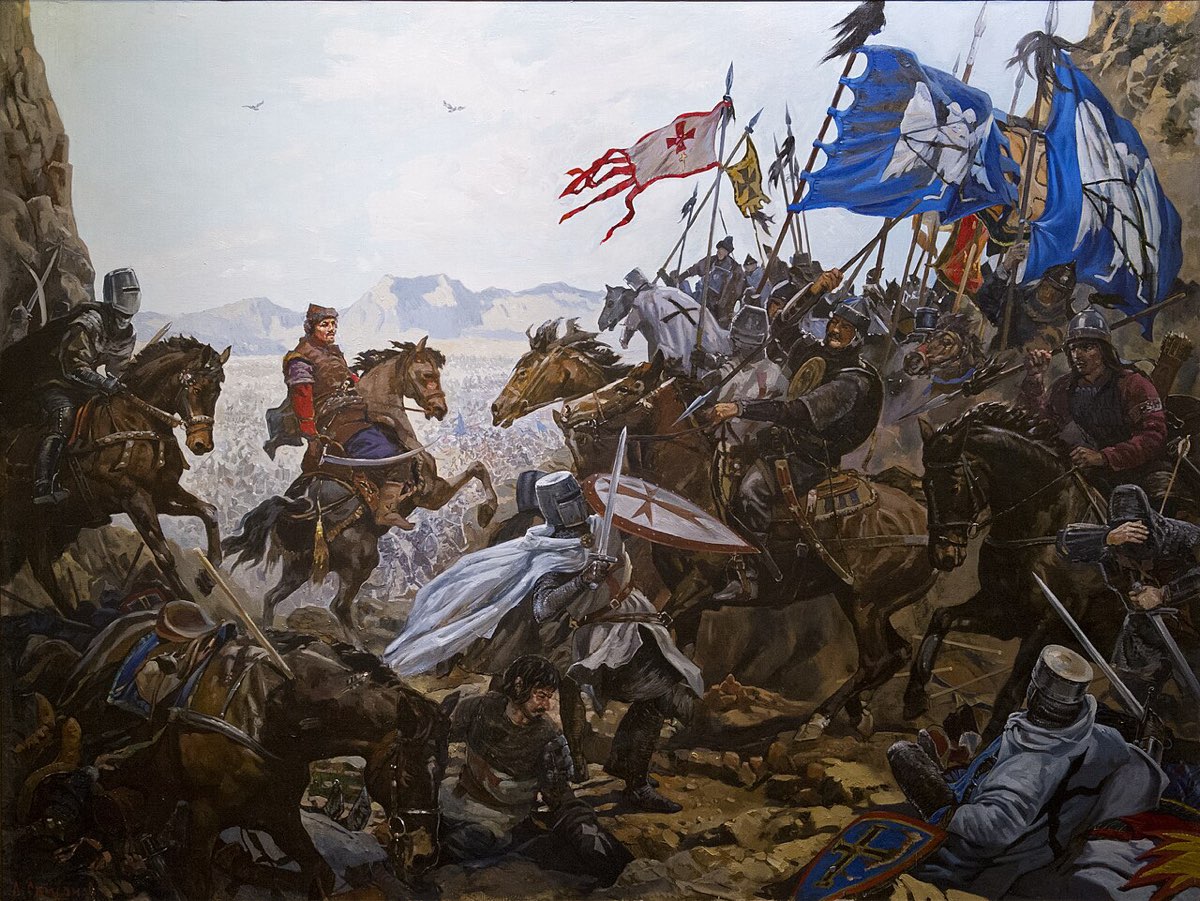
Myriocephalon War (1176)
These victories of Sultan Kilic Arslan II were not overlooked by the Byzantine emperor. At the same time, on the contrary to agreement concluded in Istanbul, the Turkmen raiders had started again to organise raids against the Byzantine. These developments led to the encounter of Turkey Seljuks sultanate and the Byzantine empire again. The Emperor Manuel Komnenos decided to abolish the Turkey Seljuk State in order to extirpate these developments against him and he set in motion with a great army that he was the leader of. He rejected all the proposal that aimed the state of peace and he advanced in the direction of Denizli. His main target was to capture Konya. Turkmens continued their guerilla war and wore out the Byzantine army. On the other hand, they were able to orient them to enter the valley of Myriocephalon that was a narrow and very steep valley in Kumdanlı located in the north of Egridir lake coming after Denizli. What the sultan wanted was also to encounter the enemy that had been worn out in this valley.
When the Byzantine forces entered into the valley, Turks who had lay in wait in the slopes started to shoot arrows like rain towards the Byzantine army. The entrance and exit of the valley were waylaid by the Turks. In the war that took place in September 1176, Manuel was defeated in a crushing manner. The Emperor could only return to Istanbul on condition that he would abolish all the fortifications in the Western Anatolia and pay a heavy compensation. Till that time, Anatolia was considered as "a country under the invasion of Turks" among the Christian world. Upon this victory, it was obviously indicated that Anatolia was definitely the homelands of the Turks. On the other hand, the Byzantine Empire that was endlessly in attack since the First Crusade had to retreat for defence from this date on. The Manzikert victory in 1071 had opened the doors of Anatolia to Turks and the Myriocephalon victory in 1176 proved that this place could not be recaptured from the Turks any more.
Kilic Arslan who had resolved all the troubles related with the Byzantine advanced towards the Danismendli principality that kept him busy for years and he abolished this state upon the capture of Malatya. However, he encountered Selahaddin Eyyubi that was the ruler of Eyyubi State for this time. The instigation and provocation of the small principalities caused the encounter of these two powerful rulers. An agreement was concluded thanks to the moderate stance of Sultan Kilic Arslan. On the other hand, Turks captured some cities and castles that were under the dominion of Armenian Kingdom of Cilicia and they expanded their borders towards Silifke. When the Byzantine emperor did not demolish the fortifications in accordance with the agreement, he decided to restart the military expeditions towards the west. In the year of 1182, he organised an extensive movement for conquests and captured Uluborlu, Kutahya and Eski?ehir and expanded the borders towards Denizli. Antalya was besieged for a long time, but it could not be captured.
Pursuant to his long and honourable life of struggles, Sultan Kilic Arslan II was worn out and overaged, and he could not organise military expeditions any longer. Therefore, he divided his country to be shared among his 11 sons. He dwelled in Konya and he superintended them in his capacity as their sovereign and leader. 11 princes were seemingly submissive to their father, but in fact, they were independent in their internal and foreign affairs. Upon the division of the country among his sons, Sultan hoped to live his last days in peace, but before long, there were struggles for the throne among his sons (1185).