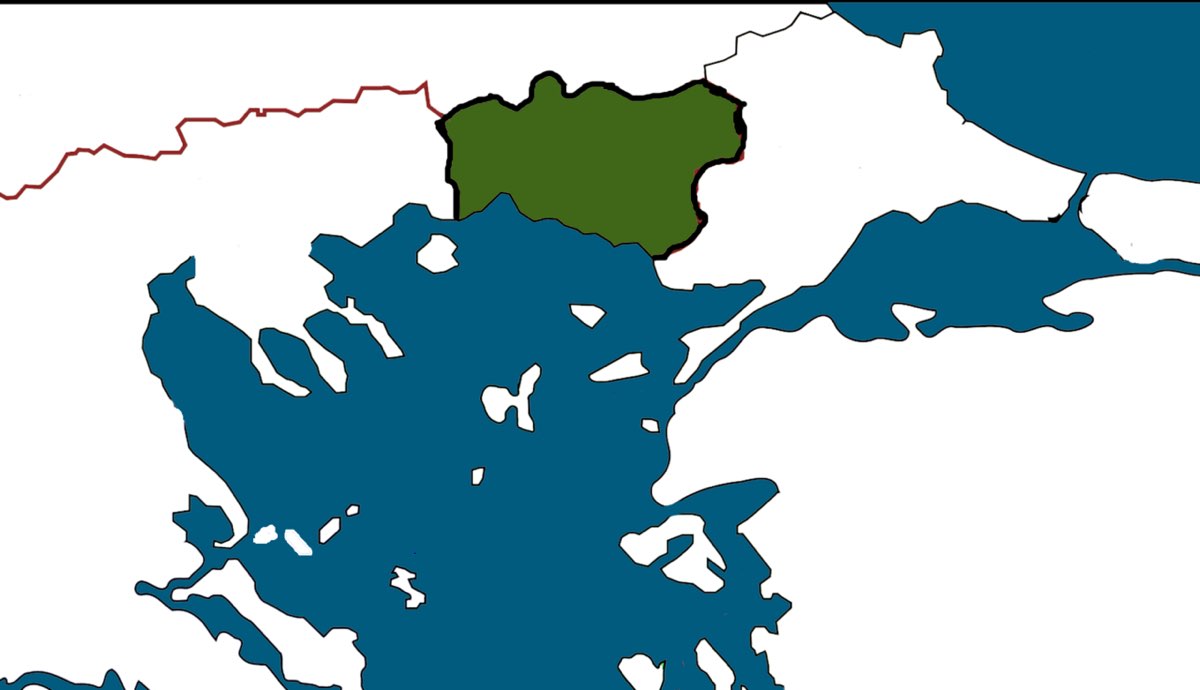
In the lighting of our knowledge, the Turkish Cultural existence in the Balkans dates back to the years just before Christ. Although there have been some data obtained recently pertaining to the former periods, they are not considered as sufficient for a definite evaluation. The Turkish cultural existence in the Balkans appeared as a result of the mass migrations that took place from two branches. Upon the migrations and settlement of Onogur-Bulgarians, Pecenek, Uz, Kuman- Kipchak people from the nort and the Oguz Turks from the south, the Balkans became a Turkish land, and it turned into a region under the dominion of Turkish culture in the 14th and 15th centuries. As a result of the following developments, a withdrawal from the Balkans was observed like an ebb and flow movement. The Ottomans started to draw back from the Balkans step by step as a result of the developments on the world, the progress of Slav culture in the northern sections, the resulting conflicts and pressures, the political struggles and the oppression imposed by England that established a great empire of colonies in the same period. Pursuant to this withdrawal, todays borders of Turkey were attained. The final borders were shaped as a result of the development experienced in the years of 1912-1913. However, the Turkish cultural presence is still maintained by the remaining people of Oguz and Kipchak Turks that stayed in the region. Of course, some of these people are the descendants of Evlad-I Fatihan, the Oguz Turks who had immigrated over Turkey and settled in the Balkans. The others are composed of Onogur-Bulgarians, Peceneks, Uz, Kuman-Kipchak Turks who had come from the north. All these Turkish groups constitute the Turkish cultural existence of today. But the managers of the cultures in which they live misuse the rivial differences among them in order to bring discord among these communities.
Pursuant to the years of 1950s, migrations from the Balkans to Turkey continued as a result of the wrong policies applied in parallel to the political changes in Turkey. All political parties who considered the immigrants as the ballot boxes caused to the trimming and decrease of the Turkish cultural existence in the Balkans maybe without intention. Despite all these developments, the Turkish and Muslim cultural presence constitute a population of nearly 12 millions in the Balkans.
Today, it is an obligation to deal separately with the presence of the Turkish culture in the Balkans due to the characteristics that we have tried to state above. Within the period of the last 60-70 years, most of the Balkan states were deformed in respect of culture under the pressure of the communist regime. Apart from these states, the Greece was included within the Western Block. Despite this peculiarity, it applied more cruel assimilation policies. Therefore, the Turkish cultural existence in the region of the Western Thrace remained only about 120 thousands of people although the population should necessarily have been 500-600 thousands of people in parallel to the normal increase of population in accordance with the demographical data pertaining to the Turkish existence. This situation shows that the cultures having two different economic policies have become integrated at one point. In respect of the culture, the two regimes have applied the same assimilation policies.
The assimilation policies applied by the Greece were particularly based on psychological deterrence, the decrease of the feeling of safety, the inculcation and the diffusion of the lack of confidence among people, and the forced immigration of people due to these reasons. Most of our people of the same kind here were obliged to immigrate to Turkey, some of them were forced to immigrate to the various regions of the Europe and the rest of them had to immigrate and settle in Australia. The struggle of cultural identity is still fought in this region. The name of Turk used in the titles of the non-governmental organisations founded in the region was abrogated in the recent years. All of the non-governmental organisations and the voluntary societies try to survive their existence under pressure. Furthermore, our people of the same kind in this region are prohibited from working in the official positions of the state. Similarly, the organisation titled as Dikatsa does not issue the equivalent certificates for diplomas and the work permits for our people of the same kind.
Accordingly, the immigration directed towards Turkey has been accelerated. Education has been an important factor that sped up this immigration. Our people of the same kind do not gave any opportunity to have education in the secondary schools and universities in Greece. These people try to immigrate to Turkey and to reinforce their opportunities for education in relation with their futures. These situations constitute another aspect of the deportation and assimilation efforts.
to be continued