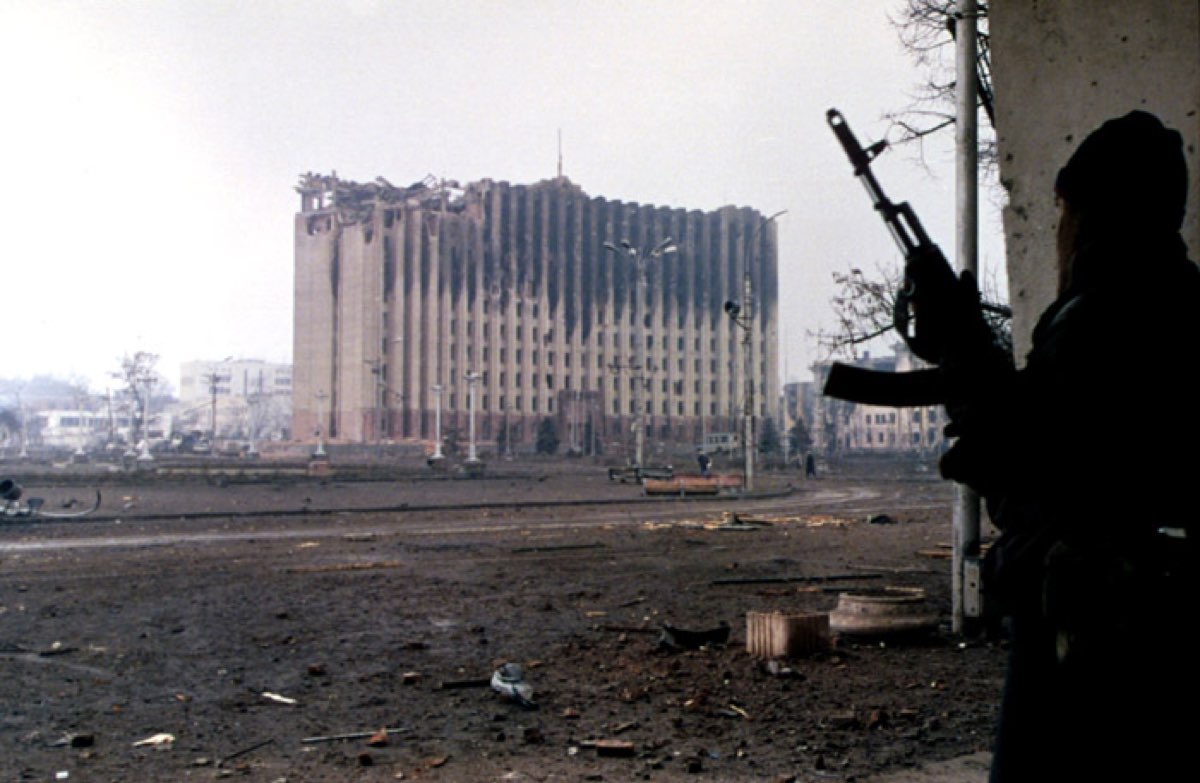
When the Soviets Union was dissolved in 1989, the Tchetchen-Ingush people remained as an autonomous republic within the structure of the Russian Federation. But after a while, the winds of nationalism and independence that blew in the old geography of the Soviets Union influenced the Tchetchens. As a result of this influence, there were some elections for the Parliament and Presidency on the date of 27th October 1991 in Tchetchenistan and Cahar Dudayev was elected as the President with the rate of 85% of the votes. Afterwards, the independency of the Tchetchen Republic from the Russian Federation was declared on the date of 1st November 1991. Russian Federation did not recognise this development and declared the martial law on the date of 7th November. After the events that burst out on the dates of 8th-9th November, the Russians troops of Army was sent to Tchetchenistan, but they had to retreat. In this environment, Ingush people preferred to remain connected to the Russian Federation as a result of public referendum carried out on the date of 30th November 1994. On the other hand, Russia did not want to recognise the independency of Tchetchenistan and tried to obstruct it through military forces. Moreover, Tchetchens did not participate in the elections of the new constitution and parliament of the Russian Federation on the date of 12th December 1993. As a matter of fact, Russia thought that the independence of Tchetchenistan would be a threatening example for the other ethnical groups that live within their structure and it did not want to give up its political and economical benefits and interests in the Northern Caucasus. Cahar Dudayev, the Tchetchen leader who knew this proposed to settle down the problem in a political state with Russia and he even mentioned about the co-operation of the oil pipelines and the railways.
The answer of Russia to this proposal was the arming of the opponent Tchetchens. Umar Avturkhanov, the leader of the Temporary Council established by the Tchetchen opponents appealed to the Russian leader, Boris Yeltsin on the date of 23rd July 1994. He wanted that his administration would be recognised as the only official administration of Tchetchenistan. TASS News Agency declared that the Temporary Council was recognised by Russia as the "Resurgent government" on the date of 24th July. Taking courage from this declaration, the Tchetchen opponents attacked to the capital Grozni from three directions upon the order of Moscow government. These opponent forces that could not succeed in the first stage started to have some effect gradually. Upon these events, the Chief of the General Staff of Tchetchenistan declared mobilisation on the date of 24th November 1994. Afterwards, the Tchetchen opponents in the command of Moscow realised their biggest attack on the date of 26th November 1994 and invaded large sections of Grozni. But this superiority fell short and the forces connected to the government of Tchetchenistan and Cahar Dudayev defeated the opponents.
Nevertheless, Yeltsin gave an ultimatum to the government of Tchetchenistan for the disarmament. Upon these developments, the Russian Minister of Defence, Pavel Graçov and the Republican President of Tchetchenistan, Cahar Dudayev gathered in Vladikafkas and decided to negotiate again on the date of 12th December 1994. Unfortunately, this hope for peace was lost upon the unexpected order of Yeltsin given to the Russian armies for the attack to Grozni on the date of 11th December 1994.
Meanwhile, let us note that the armed struggle given by the government of Tchetchenistan against Russia turned obligatorily into a movement of guerilla against the superior Russian military forces.
100 armed Tchetchens under the command of Şamil Basayeb entered into the Russian town of Budenovsk on the date of 14th June 1995. They held hundreds of hostages from the hospital and then returned to Tchetchenistan with a great success. Pursuant to this great and effective guerilla action of Tchetchens, the Russian and Tchetchen parties concluded an armistice agreement on the date of 30th July 1995, but they could not resolve any political solution to the problems. As a result of this lack, the short fights started again in Tchetchenistan. On the date of 14th December 1995, Tchetchens entered into Gudermes, the second biggest town of Tchetchenistan that they had to evacuate before. However, they had to retreat again pursuant to the fights in which hundreds of people were sacrificed.
Before long, the second biggest guerilla action of Tchetchens took place. On the date of 9th January 1996, the Tchetchen group of the rebellions named as "Yalnız Kurt" (Lonely Wolf) under the leadership of Dudayev's son-in-law, Salman Raduyev organised a raid into the city of Kizilyar in Daghestan. They took 2 thousands of people as hostages from its hospital. The rebellions set free most of the hostages and they advanced towards Tchetchenistan with only 150 hostages. However, the Tchetchen rebellions were waylaid by the Russian military troops in the village of Pervomayskaya in the south of Daghestan (10th January 1996). Russians besieged the village on the 11th January. The Tchetchen rebellious militias rejected the Russians' proposal for setting the hostages free for two times. In the course of the Russian bombardment that lasted for three days continuously, Salman Rudayev and his friends cut through the Russian blockade returned back to Tchetchenistan.
Meanwhile, on the date of 16th January 1996, 9 persons with the Northern Caucasus roots who were Tchetchen supporters attacked to the ferryboat called as Eurasia in the port of Trabzon in Turkey that was on the verge of a journey to the Soçi port of Russia. They took the passengers on board as hostages. Their purpose was to take the attention of the world to the events experienced in Tchetchenistan and they achieved this aim. Finally, they ended their action when they came to Istanbul with the aforesaid ferryboat on the date of 19th January 1996.
The effects of the Kizilyar raid made by Salman Raduyev took great attention. As the Russian opposition parties stated it, this raid was interpreted as the first indicators of the fact that Russia started to loose their initiatives about the problem of Tchetchenistan. For example, the President of the reformist Yablako Party, Gregori Yavlinsky had stated that "the Russian President, Boris Yeltsin went down and down in Tchetchenistan and the war in Tchetchenistan was the "Vietnam of Yeltsin". He had also uttered that Yeltsin would try to get rid of the Tchetchenistan problem before the elections in June 1996. As a matter of fact, it was understood that Yavlinsky's expectations were right taking into consideration the events that occurred until the month of December in 1996. Actually, Yeltsin wanted to resolve the Tchetchenistan problem even particularly for the sake of "electoral campaigns" in due time and he had negotiated with the competent authorities of Tchetchenistan to this effect. However, it could not be possible to state that Yeltsin was sincere in the negotiations for peace.
Whatever the reason was, the year of 1996 was the year in which there were great negotiations carried about the resolution of the Tchetchen problem. It was possible to observe these negotiations since March 1996.
For example, it was interesting that a group of action would be established for the application of the governmental plan about the resolution of the Tchetchen problem in accordance with the decision of the Russian government taken on the date of 2nd March 1996. From that date on until the date of 28th March 1996, the aforesaid group was charged to provide the necessary information services to the relevant Commission on Tchetchen Problem that would be given to the military troops to participate in the resolution of the Tchetchen problem. On the other hand, the same group was interested in the provision of the proper information about the democratic movements in the Russian elections for presidency that was to be carried out on the date of 16th June 1996. As a matter of fact; the duty of this group was not the provision of the information (giving proper information), but the provision of misinformation (giving misleading information).