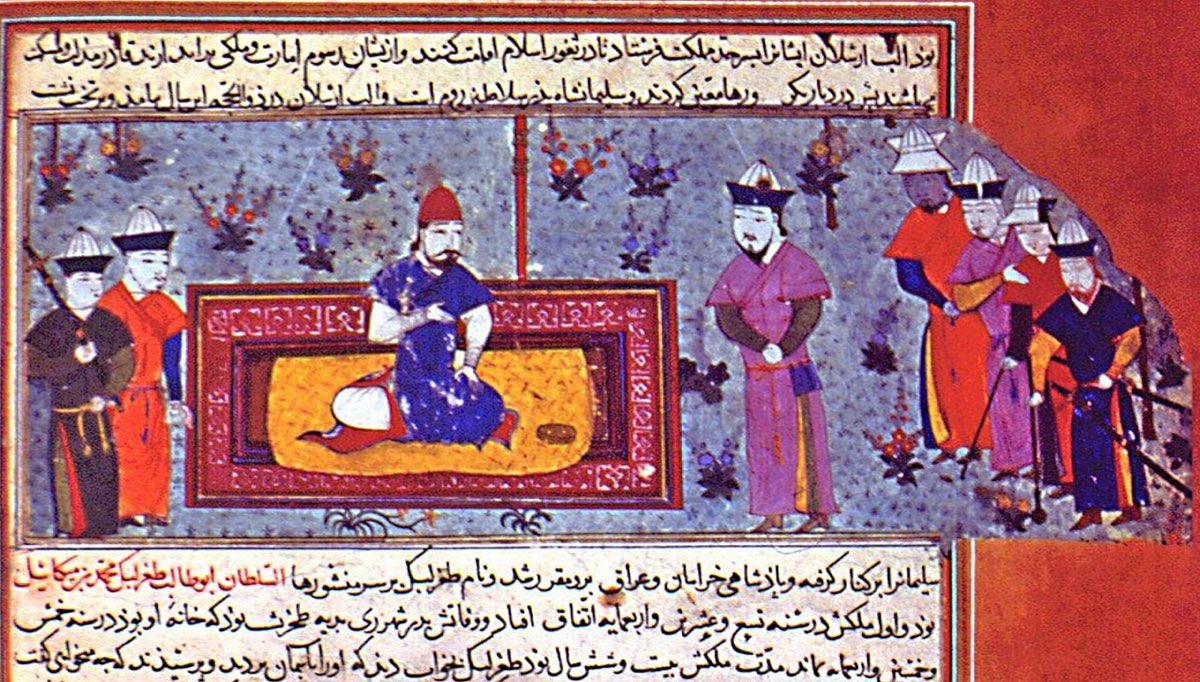
who was born in 1030, is the son of Çağrı Bey and nephew of Tuğrul Bey. He drew attention in the battle he won a great victory against Gazne Ruler Mevdut in 1044. Çağrı Bey prepared him for governing the state by leaving him in 1058 cities such as Belh, Toharistan, Tirmiz, Kobadiyan, Vahş and Valvalic.
Alparslan became the ruler of Horasan Seljukian State in 1060 upon death of Çağrı Bey after the agreement with Gazne State in 1059. In 1063, in accordance with the testament of Tuğrul Bey, his nephew and his stepson Suleyman was enthroned by Vizier Amidülmülk Kündüri. However, Seljukian beys acted in favor of Alparslan. At the same time, upon Kutalmışs attack on capital city Rey, Vizier Kunduri, calling Horasan Seljukian Ruler Alparslan to Rey, assigned the Seljukian throne to Alparslan. Alparslan, in the battle, defeated Kutalmış and entered Rey and was enthroned in 27 April 1064. He appointed Nizamülmülk as the vizier instead of Kündüri. Alparslan, who disciplined disorganized Seljukian beys ordered on 11 May 1064 to the caliph of the day that in all mosques sermons be read in his name. Eastern and Western Seljukians were united under the same authority by sultanate of Alparslan. Alparslan, who conquered territories near Armenia and Georgia, then besieged the soundest border city of Byzantium, Ani. He had wooden towers constructed along the difficult ramparts of Ani and attacked Ani with catapults and archers. After a long-lasting siege, Ani was conquered within 1064.
While Alparslan, conquered territories as far as Tiflis in the East in the same year, his commanders conquered various soils in Anatolia. Especially Afşin Bey became successful in various regions of Anatolia between 1067 and 1068 against Byzantium. Afşin Bey, who defeated Byzantium army in 1067 in Malatya, advanced to Kayseri. Romanus Diogenes, leading Byzantium, set in motion in 1068 to put an end to the Seljukian incursions. However, upon swift maneuvers of Afşin Bey, he had to turn back to Istanbul without reaching a result. Upon lasting Seljukian incursions and upon his commanders being defeated, Diagones leaded his army again in 1069. Years 1069 and 1070 elapsed with stroke and escape movements by Diagones and Turkish raider beys. This great Turkish invasion intimidated Byzantium. They believed that such invasion should be stopped, repulsed from these territories, made inoffensive and even eliminated.