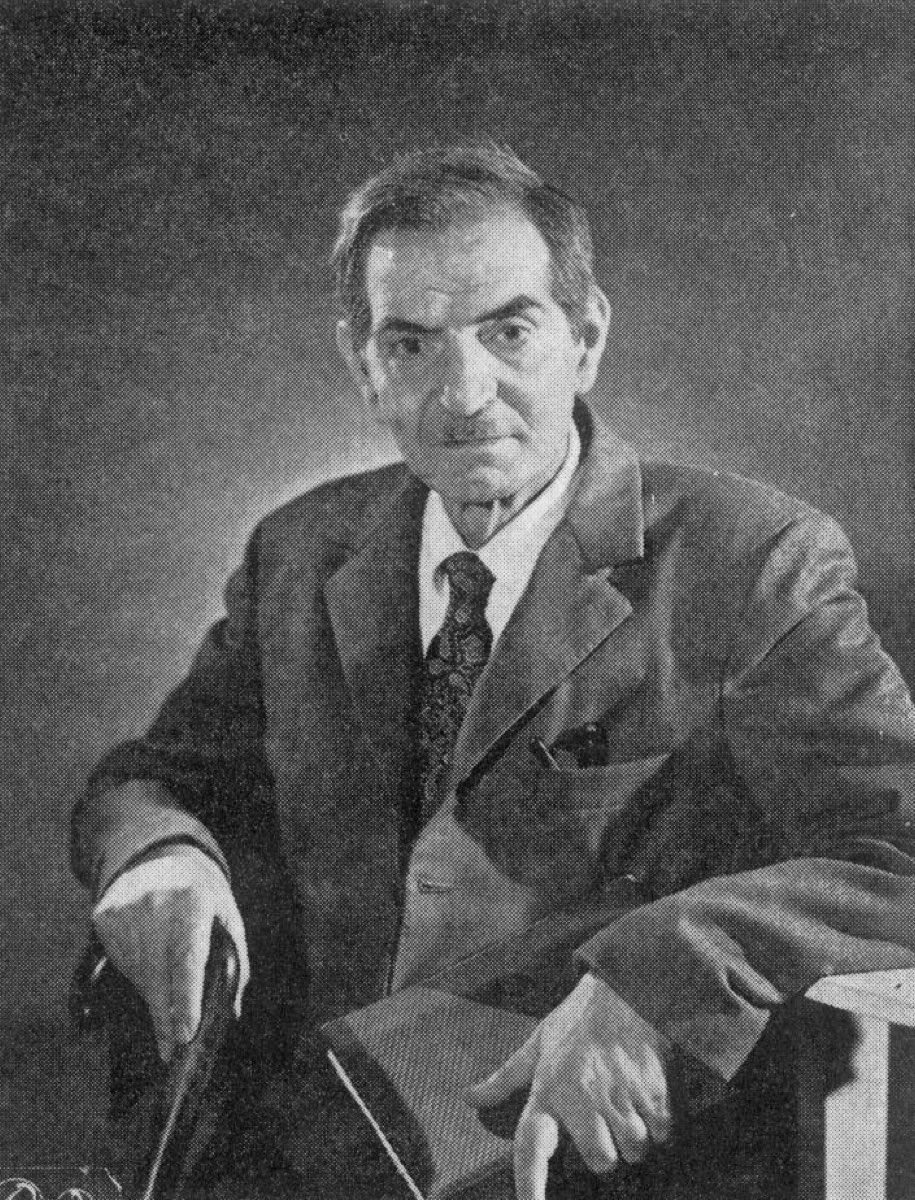
Well-known Azerbaijani poet
His full name is Doktor Seyyid Mehemmed Hüseyin Behçet Tebrizi. Mehemmed (Muhammad), is his first name, Behçet Tebrizi his surname, (Seyyid) is his nickname because he is from the generation of the prophet, Doctor is an addressing word probably because he studied in a medical faculty. Behçet is also his first penname, and Şehriyar is his penname later. The poet is known as Şehriyar in his country and in the world. His birth date being different in different sources, he should have probably born in Bağmeşe quarter of Tebriz in 1904. His father is one of the famous lawyers of Tebriz Haci Mir Aga, reputed for his maturity and wisdom, his mother is Kovkeb hanim.
Haci Mir Aga was of medium height. He had a pleasant face which was serious, calm. He was generous, nice to talk to, patient, soft-spoken with a family of about 30-40 people. He loved poetry and music, and was skillful as a calligrapher. Moreover, he was very well-informed and experienced in lawyer job. He settled down claims with good-manners and reconciled parties.
Sehriyar's childhood days are in the Constitutional Monarchy days of Tebriz. Information about his days of education is complex. He received his primary education from his father and since he liked poetry since his small ages, he learned Koran, which was a tradition to read in those times, Gulistan of Sadi, and verse Arabic Persian dictionary named Nisab of Ebu Nasri Ferahi. Then he was taught Gulistan and studied Koran to learn by heart.
He started his first official education in Medrese-yi Müttehide in Tebriz. In summer, he continued his education with Molla İbrahim Halil in Kayişkurşak. He started his secondary education at Füzuzat secondary school and continued until ninth class. In addition, he studied Arabic language and literature in Talibiyye Medresesi in Tebriz, and then was enrolled with Istanbul university in 1921 and entered medical faculty in 1923.But he could not complete medical faculty because of financial troubles. We know that the name of the girl Şehriyar loved is Süreyya. In a speech he delivered in Tehran radio in 1973, he said that they would meet with Sureyya for the last time in Behcetabad, but that she did not go, that the next morning he was banished from Tehran two or three months before his graduation from the faculty, and that he wrote his poem Behcetabad Hatiresi with reference to that date.
All sources agree that the poet started civil service in 1932. Then he was sent into exile from Tehran, he returned to Tehran in 1935 and continued civil service in Ziraat Bank. One of the most important events in Şehriyar's life is the death of his father. We see that he underwent a depression period after his return to Tehran and death of his father. He was alienated to all of his beloved people and friends. He attended necromancy sessions, inclined to mysticism, and even linked to Zehebiye sect. At the same time, he had a travel to Tebriz lasting for four months in 1937. Şehriyar's such depressive condition lasted for a long time.
Sehriyar, Tebriz'de en mühim eserini "Haydarbaba'ya Selam" ı yazar ve bastırır (1953). The poet turned back to his native land, Tebriz in mid-1953 leaving Tehran suddenly where he stayed for a long time after his death and where he underwent depressions and diseases. He started to work in Ziraat Bankasi there, and retired from there.
Sehriyar married a girl called Azize, who was a primary school teacher and one of his relatives, and 35 ages younger than himself, after settling down in Tebriz (20 August 1953), and bought a house. He had four children from this marriage. Sehriyar went to Hoşginap in 1964 and wrote and published 2nd Heyderbaba. He went to Tehran in 1976 and during a visit, his wife Azize Hanim died of a heart attack. Most of the Turkish poems of the poet were published by Yahya Şeyda in 1982 in Tehran and his 80th birthday was celebrated in a ceremony in Tebriz University in 1984.
Sehriyar got sick for several times because of his weakness due to his being old in the last years of his lifetime and passed away on 18 September 1988 and was buried in famous Makberetü'ş-Şuara of Tebriz. No shops were opened in Tebriz that day as a sign of respect to his memory, and all people wore black cloths to show their grief.
Sehriyar knew excellent Persian and Arabic, and advanced French apart from his native language Turkish. He was highly concerned with music since his youth. One of the famous music-lovers of Iran gave a precious tar left from Dervishes to Şehriyar, who played tar very well as a gift. Şehriyar, Şehriyar became friends with famous hanende and sazendes of Iran, Ebulhasan Han İkbal, Kamer, Kerimağa Safi, and wrote laments in Persian and Turkish for most of them including Ebulhasan Seba, when they died. The poet lived a simple life in Tebriz after his retirement. It is known that one hobby of Şehriyar, who loved children very much and walked around in Tebriz streets with them, was to write with his nice calligraphy the verses of Koran and give those as gifts to his friends.
He was respected for not only his skills in poetry but also because he was a seyyit (from prophet's family). Therefore, it is known that some people made him write amulets even when he was in medical faculty. The poet suffered financial troubles in his retirement days, and said in an interview to Ettelaat newspaper in Tehran in 1976 that he wore the same cloth for 22 years. He was gratified with first degree education sign for his position in Iran literature and the biggest lecture room of the faculty of letters of Tebriz University and one of the schools in Tebriz were given his name. In addition, before his death, 16 March was accepted as Şehriyar day, and after his death, his house was turned into a museum. The introduction of Kitapça of Şehriyar, who was praised also by leading poets and writers of Iran, presented Şehriyar as the "pride of not only Iran but also Eastern world".
HIS BOOKS
1- Heyderbaba'ya Selam (written in 1953, published in 1954)
2- Türkün Dili (1969)
3- Memmed Rahim'e Cevab (1967)
4- Sehendim (1970)
5- Behcetabad Hatiresi
6- El Bülbülü
7- Süleyman Rüstem'e Cevaplar
8- Döyünme ve Söyünme
9- Getme Tersa-Balası
10- Naz Eylemisen
11- Türk Övladı Gayret Vahtıdır
12- Derya Eledim
13- Türkiye'ye Heyali Sefer