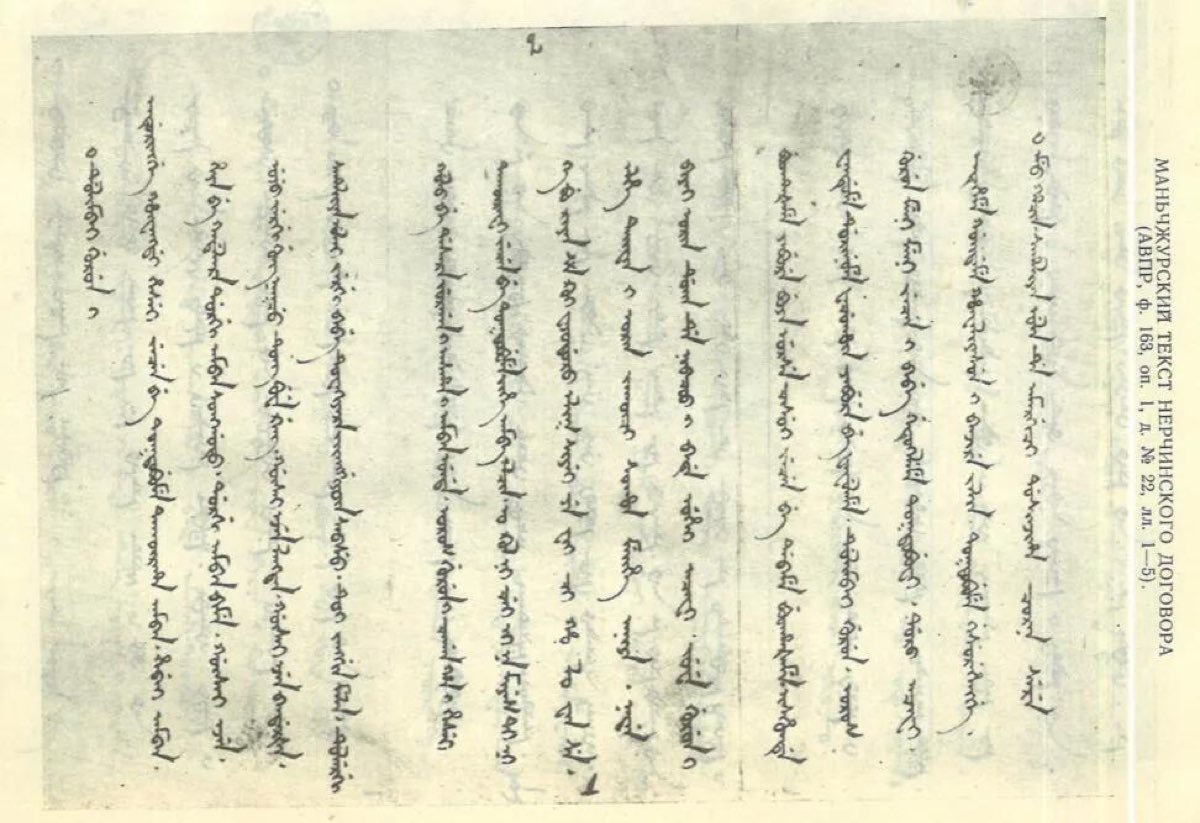
Advances that were stopped by the Chinese (1689)
This rapid advance of Russians aroused the suspicion of China that was the biggest and the strongest state in Asia in that period. The Chinese people had learned to cast artillery pieces and to use firearms from the French Jesuit monks that came to China. The Russians had encountered with disorganised and untidy "hunter" tribes that were equipped with "arrows" since the date of 1581 when they first penetrated into Siberia. Therefore, they could easily subdue each tribe that they encountered on their way. However, this time, the Russians encountered the Chinese forces that had artillery pieces after exactly one hundred and fifty years pursuant to the start of their conquest of Siberia and this situation stopped immediately the advance of the Russians. The Chinese wanted the demolition of Aygun castle in the river-mouth of Zeya from the governor of Nerçinsk in the year of 1628. The Russians consented to this demand and they demolished the castle. The Chinese people were not contented with this demolition and they set in motion against the Russians. They took up their position in Albazin over Amur and they demolished it. When the Russians attempted to found it again, they were repulsed by the Chinese forces. Under these circumstances, the Russians clearly understood that they could not establish dominion on the banks of Amur. Upon this incident, the Moscow government concluded the agreement of Nerçinsk with China in the year of 1689. Accordingly, they had to abandon the left section (northern) of Amur River and the entire basin of Zeya to China.