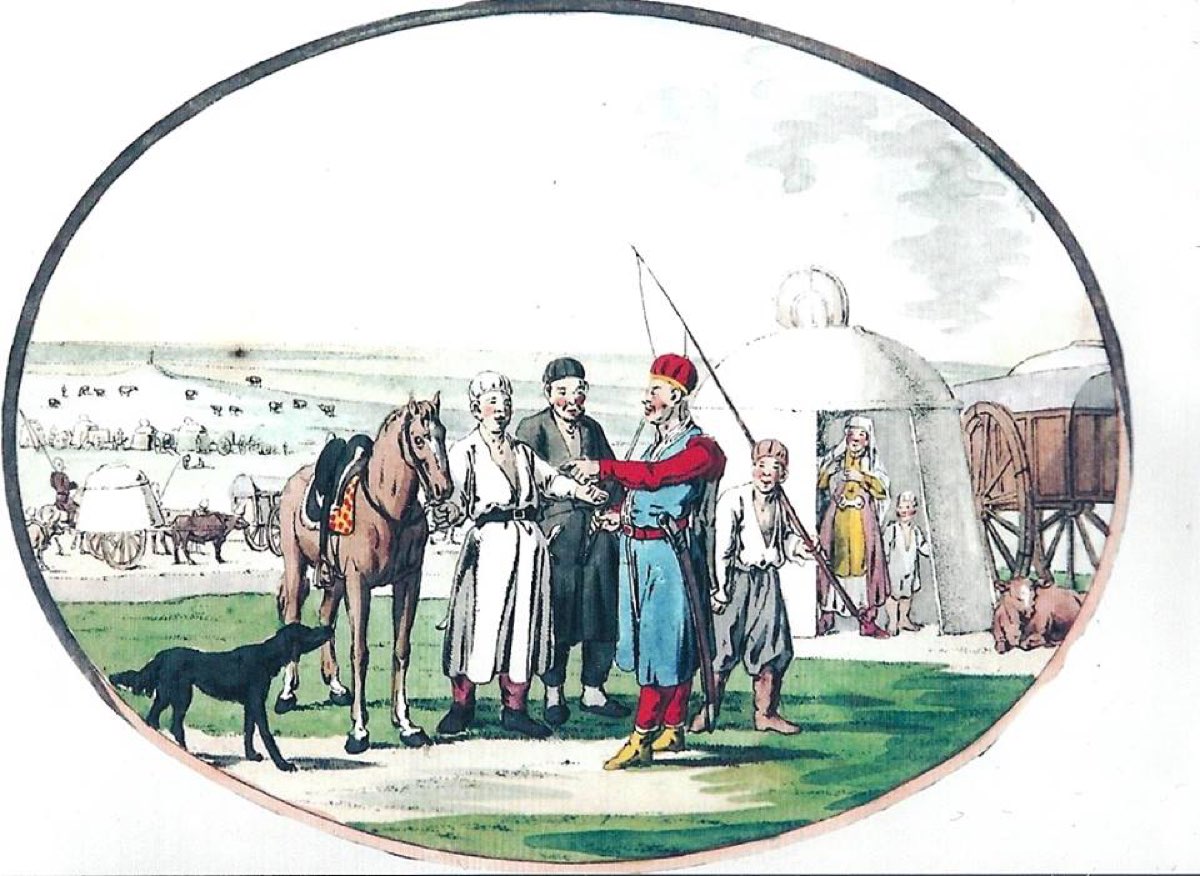
Nogay people dwelled in the Kipchak regions. When Baron de Tott came to the region towards the year of 1767, most of these people were still leading their nomadic life. However, some of them had settled in some cities and villages around Bucak and Akkerman. The nomadic people in the steppe lands were occupied in the agriculture of cereals with great amount in these rich and fertile lands and they used to consign the harvest to the Crimea and Istanbul. During the century XVIII, the danger of poverty in Istanbul had been prevented through the consignment of the cereals from this region for several times.
The establishment of dominion over Boyag people in the Kipchak steppe lands had always had a vital importance for the Crimean khans since the beginning of their period. Noya people who killed Mehmed Giray Khan in the year of 1523 threatened the peninsula with the attacks for inbasion in the period of Sahib Giray I. This khan could only establish dominion of his khanate over these people as a result of a series of bloody military expeditions that were called as Nogay "annihilation". In this period, some of the Kiçi-Nogay tribes were forced to immigrate to the region between the Crimea and Akkerman. In the beginning of the century XVIII, we have observed that some of Ulu-Nogay tribes were forced to immigrate to the basin of Kuban River and to the regions in the north of the Black Sea under the pressures of Kalmuk.
The submission of Noya people to the dominion of khan was not so faithful and they often collaborated with the claimants of the khanate or the Russians and Kazakhs. They had frequently posed a threat for the Crimea and they had penetrated into the peninsula for several times. The Crimean khans had tried to bring and settle them to the steppe lands in the north of the peninsula in order to establish dominion over them in a much powerful manner. Of these people, Mansurogullari had played important roles within the khanate. Kantimur from Mansurogullari family benefited from his influence that he had acquired in the view of the Ottoman State. Therefore, he started to act in an independent and despotic manner against the khans. He had been a distinguished person in the course of the military expedition of Hotin in the year of 1621 and the Ottoman State had entitled him as the bey of ozu. He reinforced his influence with his struggles against the rebellious Sahin Giray and Mehmed Giray.
The new khan, Inayet Giray who could not stand his tyranny attacked over him and he forced Kantimur to run away to Istanbul. Kantimur was appointed as the governor of Silistre there. Inayet Giray advanced against him again, and destroyed his tribes; however, this movement of him led to his dethronement (1637). Before long, both Inayet Giray and Kantimur were executed upon the order of Murad IV. Istanbul Government had generally tried to establish influence and protection over the Nogay people in order to attenuate the Crimean khans and to subdue them in a more effective manner since the period of Kantimur.
However, these people most of which led nomadic life opposed to the Ottoman domination. They attacked to Moldavia occasionally and despoiled these regions. In order to punish these people and to provide the extradition of the properties and prisoners, a khan was appointed from Istanbul. This situation also caused new fights between the khan and Nogay people. In the century XVIII, the Nogay people in the steppe lands started to get under the Russian Influence rather than that of the Ottomans. The Nogay people constituted the majority of the people in the army of Dolgorukiy that invaded the Crimea in the year of 1771. Russians had encouraged these people to immigrate again to the region of Kuban.
Taman peninsula and the basin of Kuban formed the second region in which the Nogay people had dwelled. In the more south and in Kabartay, the Circassian tribes recognised the Crimean khans as their sovereigns.