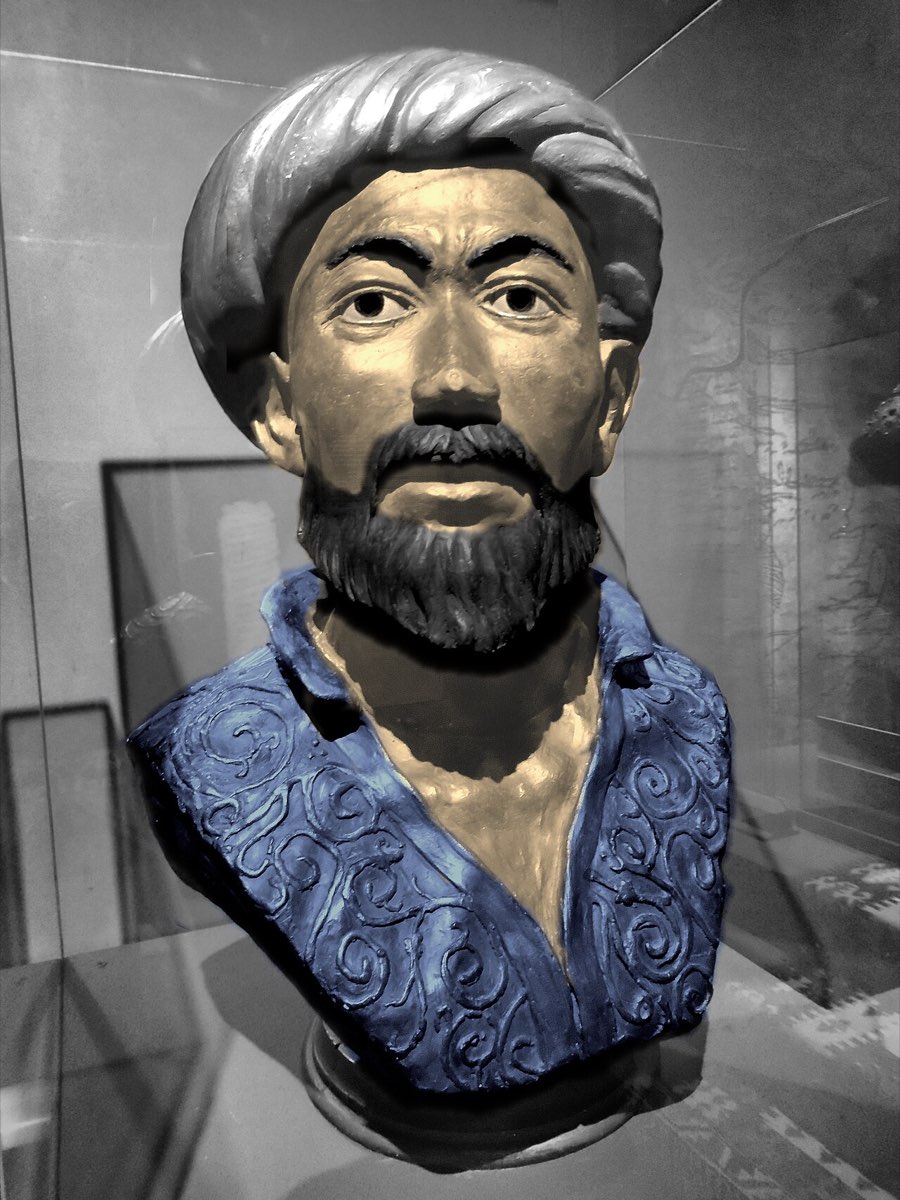
Kazan Khanate was founded in the countries of the Idyll (Volga) or Kama Bulgarians by one of the older Golden Horde rulers, Ulug Muhammed Khan in the year of 1437. Ulug Muhammed Khan had been in Saray as the ruler of the Golden Horde State in the years of 1419-1424 and 1427-1436. However, he lost the throne to the Little Muhammed and he went to the Crimea. When he could not establish dominion in Crimea, he came to the Bulgarian country and established the Kazan Khanate (437-1445). The principal region of this khanate was located on today's Tataristan- Bashkiria and Chuvashistan Republics and the autonomous regions of Vot (Udmurt) and Mari (Cirmis). Astrakhan Khanate was located in the south of Kazan Khanate. This khanate was surrounded with the countries of Finnish tribes in the north, the Nogay Khanate in the east and southeast, Sibir Khanate in the northeast, the Moscow princedom in the west and the Crimean Khanate in the southwest. The principal group of its people were composed of the Turkish tribes and particularly the Bulgarians that had settled in these regions from of old, the Turkish tribes such as Kipchak, Uz, Pecenek people, etc. that occasionally immigrated to these regions and various Finnish tribes that had a common history with these Turkish tribes against the expansion of the Slav tribes.
Muhammed who established the Kazan Khanate in the year of 1437 had still considered himself as the ruler od the Golden Horde State and had some activities in order to unite the country that had disintegrated around a common centre in a powerful manner. For ther first step, he advanced towards the doors of Moscow with a large army in the year of 1439. Then, he set in motion again in the year of 1444 and he won a great victory in the pitched battle that took place around Suzdal on the date of 7th June 1445. Vasiliy who was taken prisoner accepted all the conditions and then, he was set free. Therefore, Moscow that had been submissive to the Golden Horde State before would perform the same obligations against Kazan from that date on. It has been rumoured that 500 officials from Kazan were sent to Moscow together with Vasiliy in order to supervise the position of Moscow and the compensation affairs and they were assigned to different tasks. As the most important article of the agreement, we have observed that a bey principality under the command and domination of Ulug Muhammed Khan's son, Kasim was founded with the capital city of "Hankirman" over the Oka River that was under the influence of Moscow. The purpose of the establishment of this organisation that was called as "Kasim Khanate" (1445-1681) in the history was to control Moscow easily and to maintain reserve forces for the immediate intervention in case of necessities.
Ulug Muhammed Khan accomplished the first stage of his plan in a perfect manner died suddenly while he was returning from his last military expedition (1445). Upon his death, the plan of the integration of the other regions of the Golden Horde State could not be accomplished. In the periods of Mahmud (1445-1462) and Halil (1462-1467) that replaced him, it has been understood that the relations with Moscow and the other neighbours were continued under normal conditions.
The relations with the neighbouring Turkish khanates such as Crimean, Astrakhan, Sibir, Nogay, etc. were based on friendly terms. It has also been observed that some of the Kazan khans were from the dynasties of these neighbours. Particularly the close relationship with the Crimea had had a significant and positive importance in the course of the struggles of Kazan against the Moscow Russia. Ulug Muhammed Khan who was a forecaster person was not contented with this friendship. It has been obvious from the letters that he had sent to Murad II and Fatih Sultan Mehmed that he had wanted to establish strong and continuous relations with the Ottoman State.
However, it has been observed that the rulers following Ulug Muhammed Khan could not comprehend his hero and warrior spirit adequately and maintain it. Nevertheless, Kazan Khanate had to arrange its military, administrative and economical policies in order to preserve its existence against the Moscow State that acted on the basis of the principles of continuous wars and the expansionist policies. However, it could not be accomplished and as a result, the state had come to the verge of gradual decline under the influence of the civil turmoil and the struggles for the throne. The khans were replaced 19 times in the Kazan State that lasted for 115 years and 15 khans were enthroned in this period. Some of these khans had established dominion for two and three times. However, only 4 rulers were replaced in Moscow in the same period. The divisions of the native class of aristocracy into two groups and their intervention in the state affairs and particularly their cruel struggles in the last periods were among the factors that accelerated the collapse of the state. While the khans had had influence over the struggles for the throne in Moscow in the first periods of the Golden Horde State and the Kazan Khanate, the influence of Moscow gradually increased when the Khanate got weakened. From that date on, the Russians started to intervene in the civil turmoil and struggles that took place in Kazan.