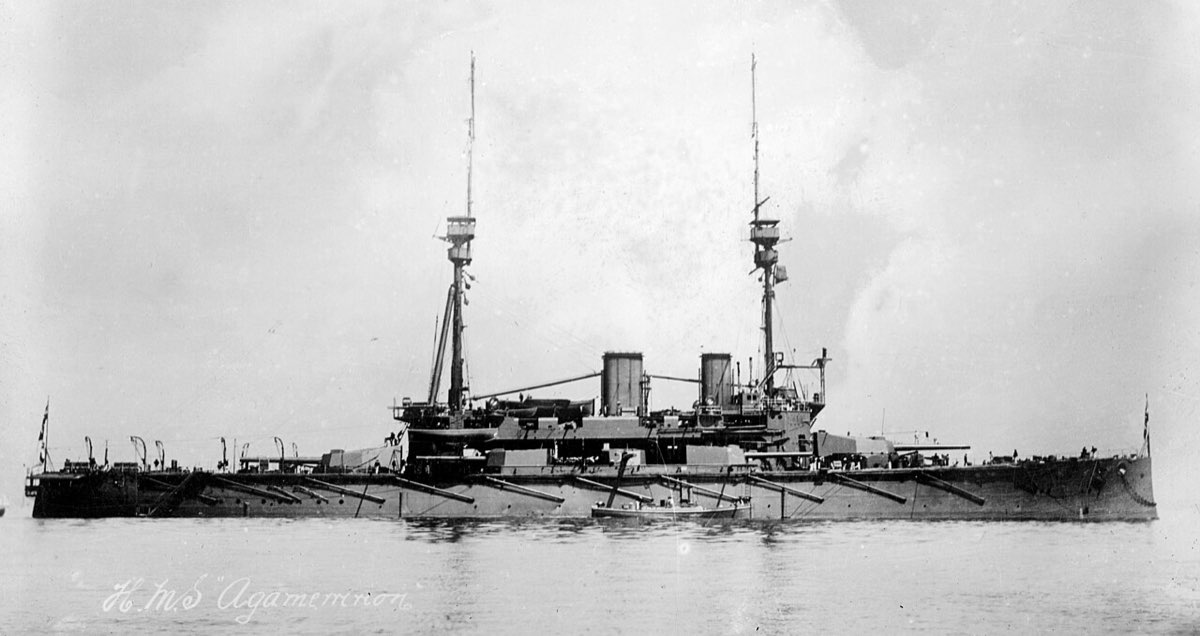
Upon the defeat of the Ottoman State and its allies in the First World War, it was expected that the Allies would conclude an armistice for the cease-fire with the Ottoman State. Mustafa Kemal had warned the Istanbul Government for the conclusion of this armistice as soon as possible. However, Talat Pasha had resigned from the Government in this period. Ahmed Izzet Pasha replaced him As the Grand Vizier. The new grand vizier was one of the older commanders of Mustafa Kemal and he had goodwill in his post. The proper application was forwarded to the President Wilson for the conclusion of the armistice. However, English competent authorities notified the Ottoman Government to send their representatives to Agamenon Armoured ship that was in Mondros port and they stated that a conclusion of armistice would be carried out there. Damat Ferit Pasha wanted to participate in the negotiations in Mondros. Ferit Pasha has some strange allegations in this respect. He asserted that he was a friend of the father of the king who had the throne in England. He had worked as a secretary in London Embassy of the Ottoman Empire before his marriage with the sister of the ruler. Therefore, he alleged that he had a friendship with the former king, and he would request an armoured ship and go to England in case that his demands would not be accepted in the negotiations. Therefore, he alleged that he could force the king through stating that I am your fathers friend, accept my demands. Upon these unfounded allegations that he had asserted, the ruler was inclined to send him to the negotiations. Against these events, the Grand Vizier Ahmed Izzet Pasha was obliged to oppose and he notified that he would region from his office in case that a resolution would be taken for sending Damat Ferit Pasha to the negotiations. The ruler could not withstand these statements and Rauf Bey who was the Naval Minister, Reşat Hikmet and Sadullah Beys were elected as the representatives.
As a result of the negotiations carried out with Admiral Calthrope, the Mondros Armistice was signed on the date of 30th October 1918. There were some special provisions in this armistice: The Dardanelles and Bosphorus Straits would be opened and all the defence fortifications in these places would be invaded by the Allies. The Ottoman Army would be discharged and their weapons and ammunition would be surrendered to the foreign states. The navy would be surrendered and they would be kept as anchored in a specific port. The Taurus tunnels would be abandoned for the invasion of the foreign states. The wireless telegraph would be out of the control and supervision of the Ottoman State. The same situation would be effective and valid for the railways. The most important and the most dangerous article for the Ottoman State that was included within the Armistice agreement was the seventh article. In this article, it was stated that the Allies would invade the strategical regions in case of an event or incident threatening the securities of the Allies.
The Mondros Armistice had the meaning of the surrender of the Ottoman State. The Grand Vizier Ahmed Izzet Pasha had considered that the conditions of the agreement were too heavy. Their only consolation was the forced acceptation of much heavier conditions by Bulgaria. The Parliamentary Council approved the agreement in advance.
The provisions of the cease-fire were declared to the Ottoman Army on the date of 2nd November 1918 and it was ordered that anybody would act in compliance with these provisions. According to the 19th article of the agreements, the Germans and Austrians that were in the Ottoman Empire would leave the Ottoman lands within one month. Liman von Sanders who acted in compliance with this provision left the authority of the command to Mustafa Kemal and he departed from the country.
The conclusion of the armistice was the start of a new struggle rather than an end for Mustafa Kemal. While he was in military school in Manastır, he used to talk frequently with his close friends about the things to be done for the liberation of his country. It was the time to put these into practice. He wanted that the forces in Anatolia would not be discharged and he announced to the competent authorities in Istanbul that the units of Yildirim Armies should be maintained even with fewer forces. When his demand was rejected, he decided to carry on his struggle in a much different manner and he set in motion to go to Istanbul.
The train that Mustafa Kemal had boarded on arrived in Haydarpasa station on the date of 1st November 1918. The navies of the Allies had already come to Istanbul and nearly besieged the city. The motorboat that Mustafa Kemal had boarded on from Haydarpasa followed a route among these foreign warships. The enormous empire had been totally destroyed and it was in a terrible state of collapse in every aspect. However, the young general that was at the age of thirty-seven was full of hope for the future. He looked at the ships in the port in a patient manner and he could even say, they will go in the same way as they came.
Istanbul was in terrible turmoil in those days. Talat, Cemal and Enver Pashas who had been the leaders of the Committee of Union and Progress had run away. In order to save their lives and to blame the others for the responsibility, the members of parliament from to the Committee of Union and Progress had determined their targets as the Naval Minister Cavit Bey, the Sheikh-ul-Islam (Sheikh of Islam= Minister of Religious Affairs) that had approved the entrance in the war and Fethi Bey who had been the secretary general of the party. The ruler has notified the Grand Vizier Izzet Pasha that these three persons should resign from the cabinet. Izzet Pasha did not accept this proposal; however, he also did not want to maintain his position any longer. When Mustafa Kemal arrived in Istanbul, he went to Izzet Pasha together with Rauf Bey in the same day. They wanted to prevent his resignation from the government. The Ottoman Government should be in safe hands and the struggle should be maintained on a cooperative basis. However, the ruler had already assigned Tevfik Pasha as the Grand Vizier. Under these circumstances, the thing to be done was to impose influence in the Parliamentary Council and to prevent the vote of confidence for the cabinet of Tevfik Pasha.
Mustafa Kemal started his studies and works upon this issue. He would explain his thoughts to the members of parliament that he could negotiate with and he discussed about the prevention of the balloting of vote of confidence for the cabinet of Tevfik Pasha. He could even find the opportunity to give a collective speech to the members of parliament in the Council by means of the mediation of Fethi Bey. Like at any time, he had spoken in an extremely impressive manner and he had been persuasive. However, when it was the turn of balloting, they voted in for the vote of confidence for the cabinet of Tevfik Pasha. Mustafa Kemal who could not achieve the result that he wanted from the Council thought about applying to the ruler that he had known from the period of his crown princedom. He had also travelled with him to Germany. When he went to visit and negotiate with Vahdettin, the ruler asked him whether the officers in the army were under his command and faithful to him in a definite manner. Mustafa Kemal had told that it was not possible to think on the contrary. Upon this reply, the ruler had said that I do not only mean today, but also I mean tomorrow. Under these circumstances, there was no need for him to explain his thoughts to the sultan. There were some activities that the ruler would put into practice. He had decided to close to abrogate the Council. As a matter of fact, the Ottoman parliament was closed and discharged on the date of 21st December 1918.
Meanwhile, the Allied States had started to invade several regions of the country in contradiction with the armistice agreement. England had already sent its forces to Izmir, Eskişehir, Afyon, Samsun, Batum and Merzifon. However, the English Admiral Calthrope had promised to Rauf Bey in the negotiations in Mondros and he had notified that the country would not be invaded. Nevertheless, they alleged that their security was in jeopardy on the pretext of the 7th article. Particularly the English Prime Minister Lloyd George did want to grant a right of living to the Turks. Similarly, Italians had sent small units of troops to Konya, Alaşehir and Afyon depending on the provisions of the agreement. Therefore, they established their dominion over the railways. France had also landed troops in Adana in advance.
The penetration of the foreign states in the various regions of the country led to the implicit and explicit activities of the native minorities for the collapse of the state. The Greek Red Cross and the Society of Immigrants provided help and assistance for the Mavri Mira Association under the domination of Istanbul Greek Patriarch. They would jointly establish some gangs in the cities and carried out propaganda works. The Armenian Patriarch Zaven Effendi had also supported these activities. A society was established for the foundation of a Pontus State on the coasts of the Black Sea. On the other hand, the English Informers Association was involved in a struggle in order to establish the protection of English people that were supposedly the most superior people of the world over the entire Empire. Moreover, the Freedom fighters and the supporters of the Allies participated in this society. Ali Kemal who was a minister and an author and a fanatic blind follower named as Sait Molla had collaborated with them and the leader of all these people that governed them was the English Religious Leader, the Priest Frew. Apart from these societies, there were some other societies and associations like Kurdish Lofty Society, Lofty Islam Society, etc. that had some activities in order to establish the dominion of the minorities or to establish a religious state in this country.