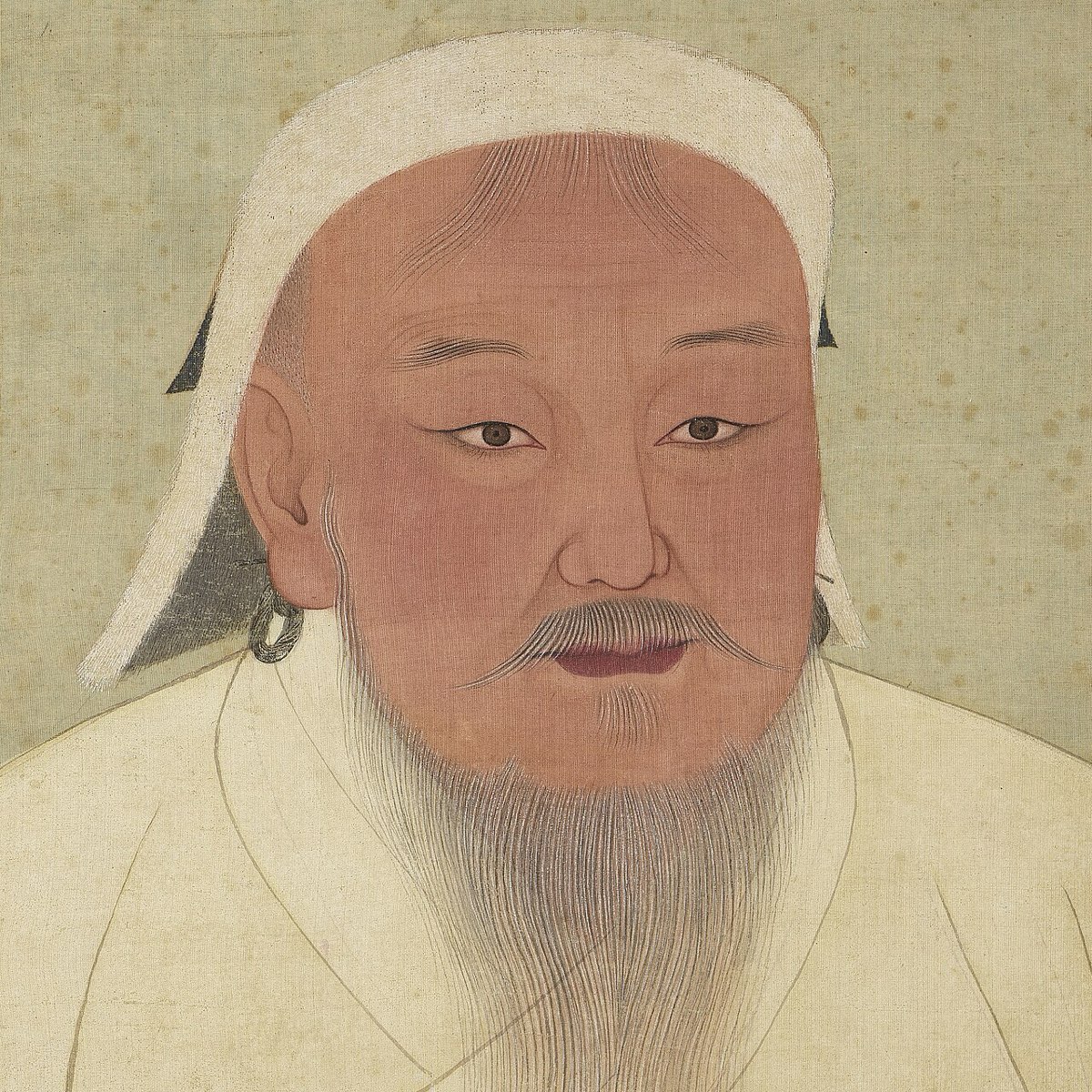
It was developed among the Turks living in Middle East in 18th century. Cenghiz-name is formed by the Turks under the rule of Cenghiz's sons in relation with the life, personality and conquers of Cenghiz Khan, the Mongolian ruler. The Turks living in the Middles East, especially Bashkurd, Kazakh and Kirghiz Turks loved Cenghiz and caused it survive up to now. In Cenghiz-name, Cenghiz is considered as a Turkish hero and the story is told like the Turkish history.
Cenghiz is born as the son of light of the day and Wolf-God, like the heroes of the creation myth. Cenghiz-name also attracted attention of historical researches as it is also assumed to be the mythological history of the Mongolians. Ebu'l Gazi Bahadır Han, the invaluable writer of Middle East Turkish in 17th century, tells in his work Secere-i Turk (The Pedigree of the Turks) that he found 17 variants of Cenghiz-name. This information reflects the prevalence of the myth among the Turks in Central Asia.
The Turks in Central Asia accepted Cenghiz as a hero of Islam and attributed divinity to him. On the other hand, Cenghiz was not likes a bit among the Turks in west. The facts that Arabian historians showed him as an enemy of Islam and historical affairs were influential on this dislike. Historical facts such as that the Mongolians came to Anatolia in a aggressive manner and they ruined the place, that Baghdad was first demolished and set on fire by Hulagu and then Timurlenk, and that Timurlenk fought with Yıldırım Beyazıd for no reason caused Cenghiz to be disliked like other Mongolians. Cenghiz-name took no place in the minds and hearts of the Turks living in the west.Another name of Cenghiz-name is "Dastan-ı Nesl-i Cengiz Han" (The Myth of the Generations of Cenghiz Khan) among the Turks in Central Asia.
Edige
In this myth, the demolition of the land of Altınordu Khan, established in 13th century on the shore of the Caspian Sea by the people of Timur in 15th century.
The name of the myth is taken after Edige Mirza Bahadır, the Altınordu Khan and the hero of the myth. The great struggles put forward by Edige Mirza Bahadır in order to keep his state alive became a myth in 16th century after his death. Six versions, namely, Kazakh-Kirghiz, Crimean, Nogay, Turkmen, Black Kalpak and Bashkırt versions are found of Edige myth, which was transformed into writing since 1820. There are many examples of myths representing the concept of hero of the Turks with the traces of the initial Turkish myths, which are not as widely-known as those given in here.