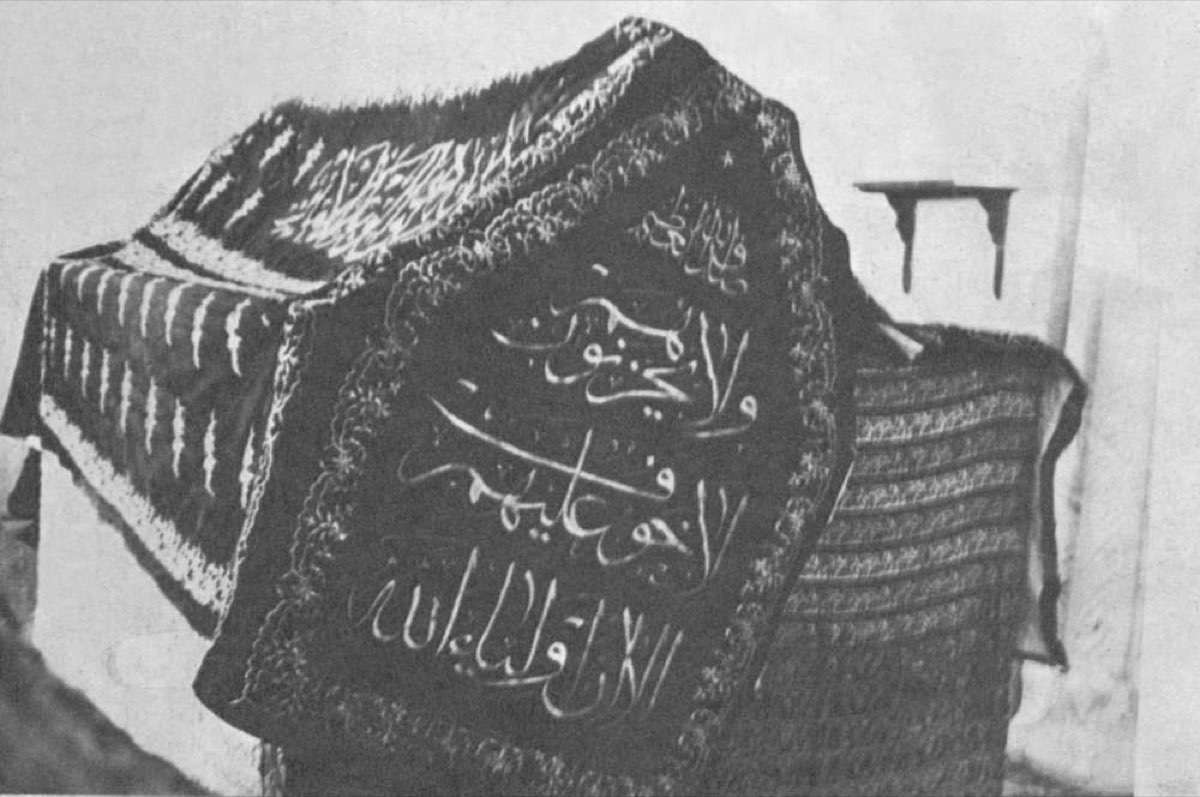
SULEYMAN SHAH
Ottoman Turks are from Kayi tribe of Bozok Branch of Oghuzes. Kayihan is the son of Gunhan. The word Kayi means flood from mountain, avalanche. Oghuzes are the cleanest generation from Oghuz. They are called Turkmens after they accepted Islam. Turks are Caucasian like European nations. They have no relations with Mongols. Oghuz Turks are fair skinned, brown haired, hazel eyed, strong-built people with high moral values. Since they are a nation in love with their freedom and independence, they had never remained under captivity in any period of their history. The states of Oghuzes lasted for 3000 years in world history. Oghuz Turks constantly established four great empires such as Hun Turks, Gokturk Empire, Seljukian Empire, Ottoman Empire. When the first three empires were destroyed by Chinese and Mongols with their constant attacks, this time Oghuz Turks established Ottoman empire.
The ancestor of Turks establishing Ottoman empire is Suleyman Shah son of Kayaalp. The following genealogy notes record that the ancestors of Osman Ghazi go towards past as follows: Ertuğrul, Süleyman Şah, Kayaalp, Kızılboğa, Baytar, Iğla, Kutluğ, Doğan, Kaytun, Sungur Tekin, Bakı, Sunka, Yakı Timur, Basak, Göktürk, Oğuz Khan, Kara Khan. The genealogical tree is considered to be 155 generations.
The native land of Ottoman Oghuz Turks was in the vicinity of Tanri Mountain in Middle Asia. Turks called this old native land "Günortaç", eastern parts "Hatay", western parts "Horasan", northern part "Kapçak". They called all of their country "Turan". The name of their notion of independence and dominance was "Kizil Elma", which was the ideal of a prospective land.
All nomad groups, clans and tribes speaking Turkish language were called Turks in general. Turk means strong and beautiful. Oghuz means holy tribes. The nations speaking Budun language and accepting their culture called Oghuzes, who were coming from a noble generation, Ulus. Buduns were called Akkemik, Uluses were called Karakemik. Turks were very cautious about keeping their main spirit. Because they were noble people establishing states and domination. They refrained from blood ties with nations under their domination. But they set them free in their religions and languages.
The positions of being a ruler, commander, administrative were given merely to Turks and the other nations were set free only in trade affairs. They could keep their existence throughout the history by keeping their language. Turks, who lived as a branch in Middle Asia and had fair skin, were the most civilized and morally superior gentlemen of Asian nations. All Asian nations admire Turkish beauty. Turkmen beauty is a symbol of divine beauty.
The greatest state of Turks was established by Oghuz Khan in Gunortaç. The state was called Hun Empire. But it is better to call this state Oghuz State. The state took 26 countries under its domination in vast territories from Korea to Caspian sea. But the empire collapsed due to the pressure by Chinese. "Bumin Khan" established Gokturk Empire instead of this state in 6th Century. These are the first Turkish nation leaving pure Turkish epitaphs for today. Those obelisks are called Orhun Epitaphs. This state collapsed because of Chinese too. However, another branch of Gokturks, that is, Uygurs, established a state and continued Turkish domination and civilization.
Uygurs are the Turkish nation who invented printing machine and paper for the first time in the world. In 840, great masses of Oghuzes settled down in Horasan due to Uygun pressure. This region remains between Seyhun and Ceyhun rivers and Caspian Sea. The Arabs called this area Maveraünnehir. Some of the Oghuzes passed beyond Russian Plains and went to Balkans and some went to Anatolia in Byzantine times. But all of those accepted Christendom.
However, Oghuzes, settling down in Balkans mingled with Bulgars, Serbs, and Bosnians. Great Oghuz masses inhabited in Horasan region were living as nomads. Arabs invaded Horasan region and began to loot this rich country. Oghuz Turks converted into Islam in masses to dominate Arabs in 10th century. Now Oghuz Turks converted into Islam from Shamanism in which people worshipped Sun, Moon and stars. They believed in monotheism and Mohammed's prophecy and Koran.
Then Seljuk Khan, one of the leaders of "Kinik" tribe of Muslim Oghuzes established Seljukian State. Muslim Turk domination, which played important roles in Eastern Asia and European political history. Seljukian Empire conquered Horasan, Iran, Arabia, and Anatolia and became a great Muslim Empire. Seljukian Turks, fought against Crusader Armies ruling over Arabs in the name of Islam. They established a great Turkish civilization in Iran and Anatolia. At last, Seljukian State was broken up in early 14th century due to Mongol pressure. And Kayihan tribe of Oghuzes succeeded in establishing Ottoman Empire instead of Seljukian state.
The Kayihani tribe of Oghuzes settled down near Merv city of Mahan plain of Horasan. Kayihanis were a big Oghuz tribe consisting of many nomad groups and clans. These were not exactly nomads, but nomad-house owners. That is, the whole tribe was like itinerant houses. The social structure of Oghuzes is divided into three. One part is farmers depending on soil, a second greater part is shepherds with flocks, and the third is craftsmen engaged in various branches of craft. The craftsmen and tradesmen were linked to trade-guild organization. In addition, there were scholars called "Horasan Saints" and commanders called "Başbuğ".
Oghuzes were led by state leaders they called Khan. One's both mother and father should be Turkmens to become a Khan. The princes from Turkish father were called "Tekin", and khan daughters from Turkish mother were called "İnal". Only those complying with this tradition could become khan. The tradition lasted until Suleyman the Magnificent in Ottoman Turks. In this Oghuz tribe, there was many troubadours, called ozans. They had sazes with them which were called Kopuz. The ozans sang some sections from Oguzname in national festivals. National festivals were called Solen (banquet); in which they ate and drank koumiss and had a good time.
Harzemsahs dominated in Horasan province after Seljukians. The basbug of Kayihan tribe was Suleyman Shah, son of Kayaalp in those times. Kayihanis were living happily in Mahan plain. But Mongol Khan Genghis, who established a state in Middle Asia, invaded whole western Turkeli with a great army. He initiated bloody wars against Harzemsahs. He looted rich cities of Turk regions and began to torture and kill people.
The history book Şerefname reads as follows:
"Ottomans are a member of Oghuzes like Seljukians. Those went to Anatolia from Horasan. Their reason of going there was breakup of the environs of that place because of Genghis Khan's oppression. Disasters took place everywhere. Such calamity was heard by everyone..."
The book named Habibü's-Siyer reads as follows:
"Genghis Khan slaughtered people in Merv city. A person named Seyit İzzettin was commissioned for counting the dead in Merv city. A few secretaries were with him. Body count lasted for sixteen days: 300.000 bodies were counted. This was a terrible scene. Beautiful girls and children were taken captives. He slaughtered people in other cities by sharing out to his soldiers 25 people for one..."
While Horasan Regions were being covered with blood with Genghis Khan's savageness, Suleyman Shah went near Ahlat city in the vicinity of Van Lake by advancing with 50.000 households of Turkmens billeting from time to time. He had 80.000 stouthearted soldiers with him. Then, Turks were living in Ahlat. Their ruler was "Balaban Bey". The situation constituted a general migration from Horasan to Anatolia.
Suleyman Shah departed from Ahlat on 25 February 1221 together with his tribe and started out for Erzincan district. He stayed in Amasya for a few days and fought against Gurcus and other nations in this region. However, he could not find a big pasture in this country.
At the same time, a ruler from Eyyubi State in Aleppo invited Suleyman Shah to Aleppo to resist Crusader Armies. Suleyman Shah departed from Amasya with all of his goods and clans. He was moving along Elbistan. He came across Euphrates. They did not know the passages of this river. Suleyman Shah rode his horse to Euphrates. But his horse could not resist the current of this gushing water.
And Suleyman Shah could not take his foot out of the stirrup. Waters took Turk's ancestor Suleyman Shah away. They could not save him even if he appeared on the water for a few times with his horse. The people of the tribe began to cry. Suleyman Shah was drown. Soldires took his body out of the sea. They placed him into his tent and mourned in tears by rotating around his tent nine times. All people of the tribe were sad like orphans losing their father .They constructed a tomb in front of Caber Castle in the vicinity of Raka town and buried his body there.
Bu suretle Süleyman Şah, 10 Kasım 1228 tarihinde bu türbeye gömüldü. O zamanlar bu mezara "Türk Mezarı" adını verdiler. Öldüğü zaman altmış yaşındaydı. Asıl adının Türkçe Sülemiş olması ihtimali çok kuvvetlidir. Süleyman Şah'ın mezarı, daha sonra Türkiye Cumhuriyeti topraklarına verilmiştir. So was Suleyman Shah buried on 10 November 1228 in this tomb. The tomb was called "Turk Grave" those times. When he died, he was sixty. It is probable that his real name in Turkish was Sulemiş. Suleyman Shah's grave was later on added to the territories of Republic of Turkey.
Upon his unexpected death, Kayis were confused. They were billeted in the vicinity of a water called Kubur. Dissension took place among his sons. Among his four sons, Sungur Tekin decided to go to Gündoğdu, and went toward that direction. His other sons Dündar and Ertuğrul took four hundred forty four households to go to Surmeliçukur in Pasinler plain in the vicinity of Erzurum and established a summer pasture. Then they went to Ankara and settled down in Karacadağ. Then Ertuğrl Ghazi was appointed to border emir by Anatolian Seljukian Sultan to Sogut. His son Osman Bey stablished Ottoman State then.
Suleyman Shah is the one who took Kayihani tribe, who are our ancestors, to Anatolia and made them inhabit there.