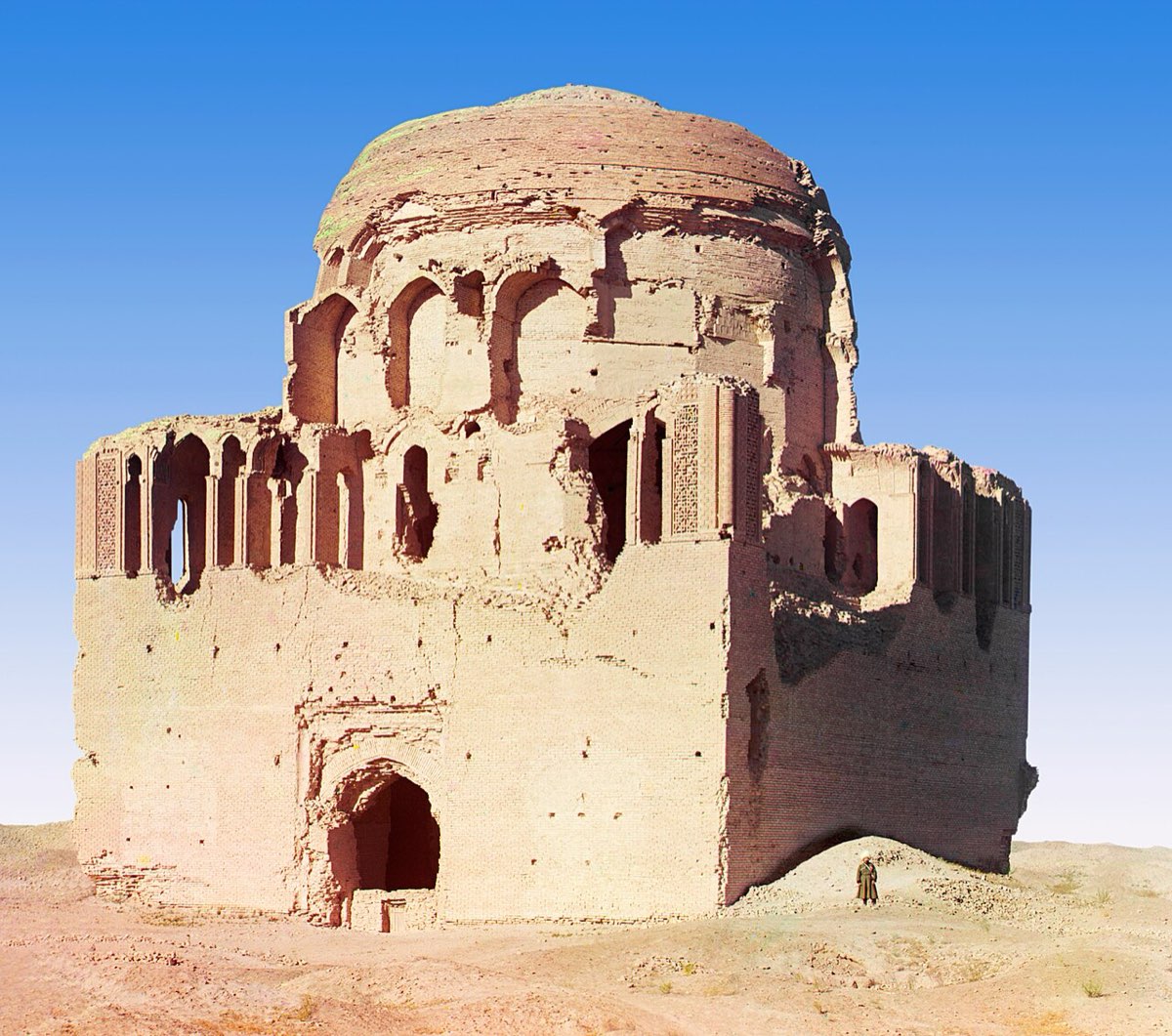
Sencer, the son of great Seljukian Sultan, Meliksah, was born in Sincar in 1086. Sencer, who got experienced in state affairs as from his childhood, put down rebellions in the east under state service in times of his elder brothers Berkyaruk and Muhammad Tapar. Upon his successes there, he was appointed to Horasan melik, and eliminated the assaults by Karahanli Ruler Kadir Khan against Seljukian State in 1102. Moreover, he took Ghazni state under Seljukian rule.
Sencer, who followed his father, Meliksah's policy, reestablished Seljukian order in the east of the country from Horasan. On death of Muhammad Tapar, who was enthroned after Berkyaruk; while his little son Mahmut was enthroned on 18 April 1118; Sultan Sencer proclaimed independence on 14 June 1118 in Horasan.
Sencer, who defeated his nephew in the war in Save on 14 August 1119, became Great Seljukian Sultan. He transferred the capital of the state to Horasan from Iraq-Persia. Then he made great wars and conquests around him and attained the title of Sultan-ul Azam. Sencer put down the rebellion of Karahanlis in 1132, Ghazni in 1136, Karahitay in 1141 and Harezm in 1147. In 1152 he defeated Gurlus.
But Sencer lost the war in Belh against Oghuz Yabgu in 1153 and was taken captive. Since Sencer did not want to be a sultan under captivity, he left sultanate and started to live in Merv Hankah. After a 3-year captivity period there, he was rescued in April 1156, but he died on 29 April 1157 when he was 91 in Merv and was buried in the tomb he constructed himself.
In the period of Sultan Sencer, who protected scientists and encouraged science, Horasan became a center for whole Islam world and Anatolia in terms of religion and scientists.