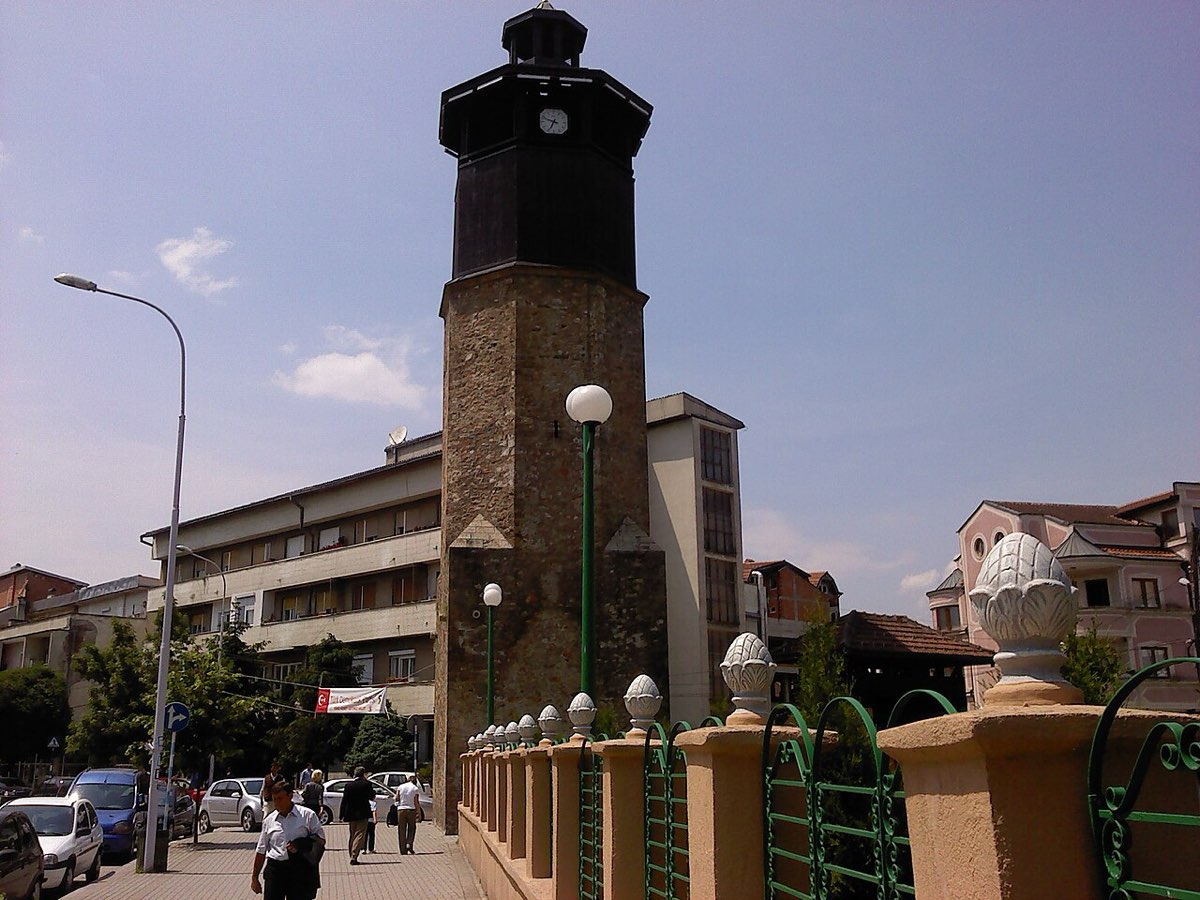
Gostivar has a long history. It goes back to 7th century BC. It is known that there is a town called Draudak (built in 170BC) near Gostivar. The signs of life in this period are seen near Polok valley. Among these signs, there are some architectural works from Rome, Byzantium, Hun, Avar, Bulgaria, Vardar, Oğuz, Peçenek, Kuman ve Ottoman Turks as well as Slavic tribes. Some Macedonian writers claim that Gostivar comes from old Slavic anthropologic names. A district in Praga in Czech Republic has the similar name as Hostivar. These said writers claim that Gostivar is a Slavic word gosti meaning guests who are in a hurry or go quickly. They also pretended that names Radogost, Gostirad, Gastovit, Dobrogost, Dragost, Milogost, Stragost and Yadovar were used instead of Gostivar in 9th century. It is seen that Gostivar was used as Gostimir and Gostomir in 12th century. This name is used as Gostodrag, Gostimir, Dobrogost, Radogost in Serbian, as Hostivar, Hostibor, Hostimil and Hostihrad in Czech; and Goşciwit, Gociwuj in Leh language.
The word "var" or suffix -var" in Turkish is used in similar forms in all Slavic languages. For example, it is used as "var" or "-var" in Serbian, "vár" or "-vár" in Hungarian, "oara" or "-oara" in Polish, "war" or "-war" in Leh, "vari" or "-vari" in Albanian; "vâr", "-vâr", "-vâre" or "-vâri" in Persian. We see names of places in the region such as Gostivar, Vardar, Vardarişte, Vardara, Vardarski, Vardarka, Vardarinka, Povardarye, Povarderest, Jitovar, Kalivar, Yadovar, Samovar, Hvalivar, Vardar, Antivari, Varvara, Varda, Varvara, Kalivari, Byelovar, Daruvar, Vukovar, Timişoara, Curtişoara, Scarişoara, Sighişoara, Calidioara, Hostivar, Dombuvár, Dünöföldvár, Györvár, Kaposvár, Kupavár, Mosonomagyarvár, Naludvár, Sarvár, Székesfehervár, Sgedvár, Tiszavasvár, Tiszoföldvár, Várpolata, Vasvár etc.
It is possible that Gostivar word comes from the period of Union of Avar Turk-Slav tribes in the Balkans between 562-803. The most common meaning of these words is guests. But the var has not the meaning of exist in Turkish. This is rather castle or a fort with the meaning of meeting or waiting. So Gostivar may have the meaning of a guest place or guest fort. Deriving from this, there are also other meanings such as hospitable person or land.
The history of Gostivar Turks started with Hun settlement in the region in 378. Avar, Bulgar, Vardar, Oğuz, Peçenek and Kuman Turks came to the region between 378-1371. They left the signs of their culture and architecture of which few could stay today.
There are some antronyms, toponyms, hydronyms and similar names of these clans. lere ve benzeri adlara rastlanmaktadır. When Ottoman Turks conquered Gostivar and neighborhood they sow various buildings and architectural works such as castles, towers, water tanks, bridges etc. But it is not possible to talk about these works because they have not been examined in detail. The first Turkish attack to Gostivar was in 1336 when thousands of Ottoman Turks landed on Selaniko and forwarded through the source of Vardar River. Some of the Turks, who live in these places today, are the great-grandsons of these Turkish pioneers.
To be continued