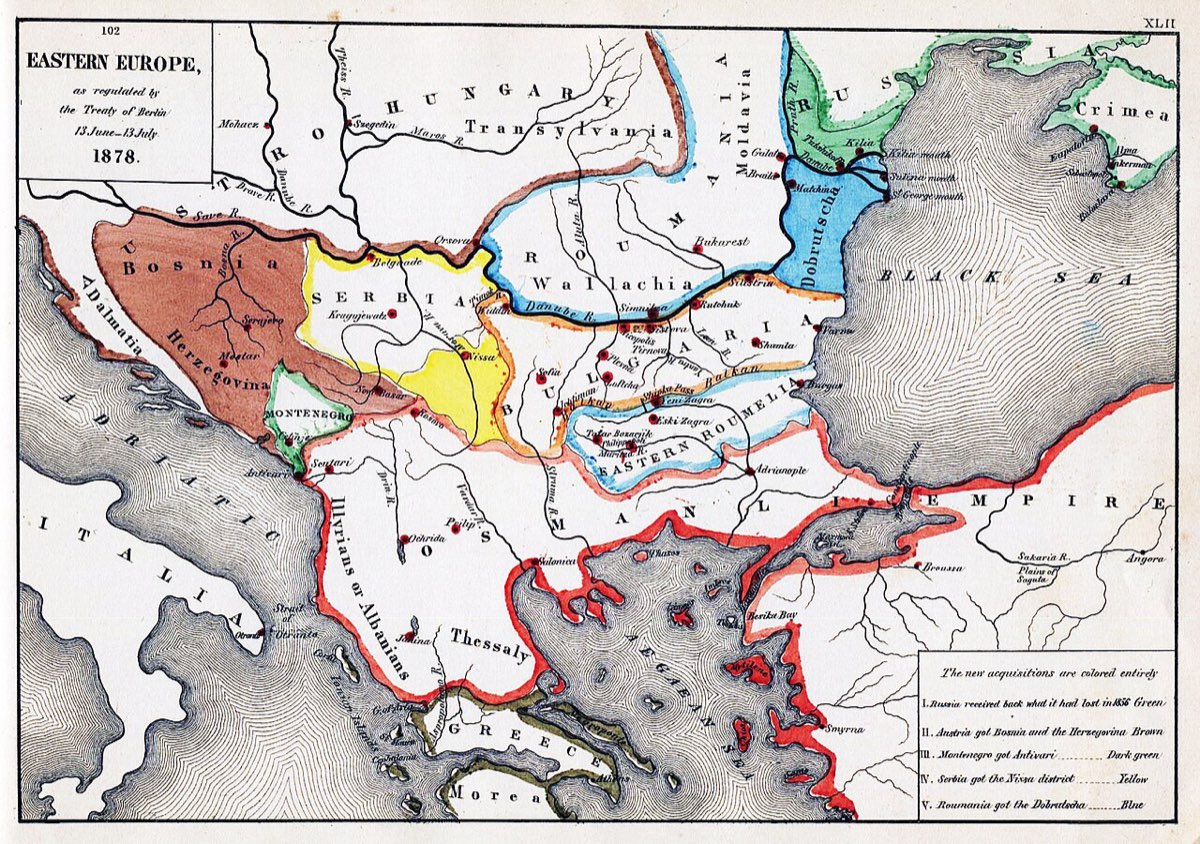
East Crisis continued its existence in the forms of Near East Crisis and Far East Crisis when Napoleon Bonaparte entered into Egypt in 1798 and Ottoman Empire collapsed in 1918. The series of incidents which formed East Crisis, are; Napoleon Bonaparte entered into Egypt in 1798, Greek Rebellion in 1821, Revolt of Egypt Governor Mehmet Ali Pasha in Egypt in 1830, Crimean War between 1853-1856, Revolts of Ciddah and Syria in 1858, Eflak and Bogdan Uprisings between 1857-1869, Tumult in Serbia between 1858-1870, Suez Channel Problem between 1859-1869. They started as inner problem of Ottoman Empire but became the problems of Europe in time. East Crises entered into a new phase in 1875. Ottoman government increased land tax one fourth in order to find additional funds for budget. But this caused Serbian revolts Bosnia-Herzegovina on 13 April 1875. Soldiers moved towards rebellion Serbians who cut the roads and got the control of some villages and bridges. It spreaded other regions in the country in a short time and started a diplomatic crisis both at home and abroad. In fact, it started the Great East Crisis, which will last in 1878.
After the rebellion in Bosnia-Herzegovina, Mahmud Nedim Pasha was assigned as Prime Minister, who made changes about the management of governors in provinces. Some time later, he abolished the tax and forgiven some debts of formers. He also promised new basic reforms in Ottoman empire with the declarations announced on 20 October 1875 and 12 December 1875. But revolt continued despite these efforts.
Revolt in Bosnia encouraged Bulgarian revolutionary committees for start an uprising in Bulgaria. They started a rebellion in April 1876 near Filibe and Pazarcik. They murdered hundreds of Turks during this revolt and they applied an assimilation policy. Having the support of Russia, Serbia announced war against Ottoman Empire on 1 July 1876 after signing a friendly agreement with Karadag. Thus Balkan Crisis I started.
Bosnia Crisis, Bulgarian Revolt and Ottoman - Serbian & Karadag War gave European countries an opportunity to interfere Ottoman administration. Austria and Russia agreed on taking necessary measures in the Balkans and signed an agreement in Reichstat on 8 July 1876 in order to show their determinate attitude towards Ottoman Empire.
Reichstat Agreement laid the foundation for sharing Ottoman Lands between Austria and Russia, which countries were followed by France and England for the rest of Ottoman empire. Turkish armies defeated Serbians in August 1876 near Aleksinats and this brought East Crisis to a new dimension. Russia sent ultimatum to protect Serbia and succeeded. Moreover, they had the opportunity to start a war against Ottomans in order to reach its objectives of making Black Sea a Russian lake and control the Channels and Balkans. Their real aim was not to save non-Muslim and non-Turk elements in the Balkans but to protect its own imperialist, economical and political interests. Russian Tzardom wanted to dominate the world in the said period.
To be continued