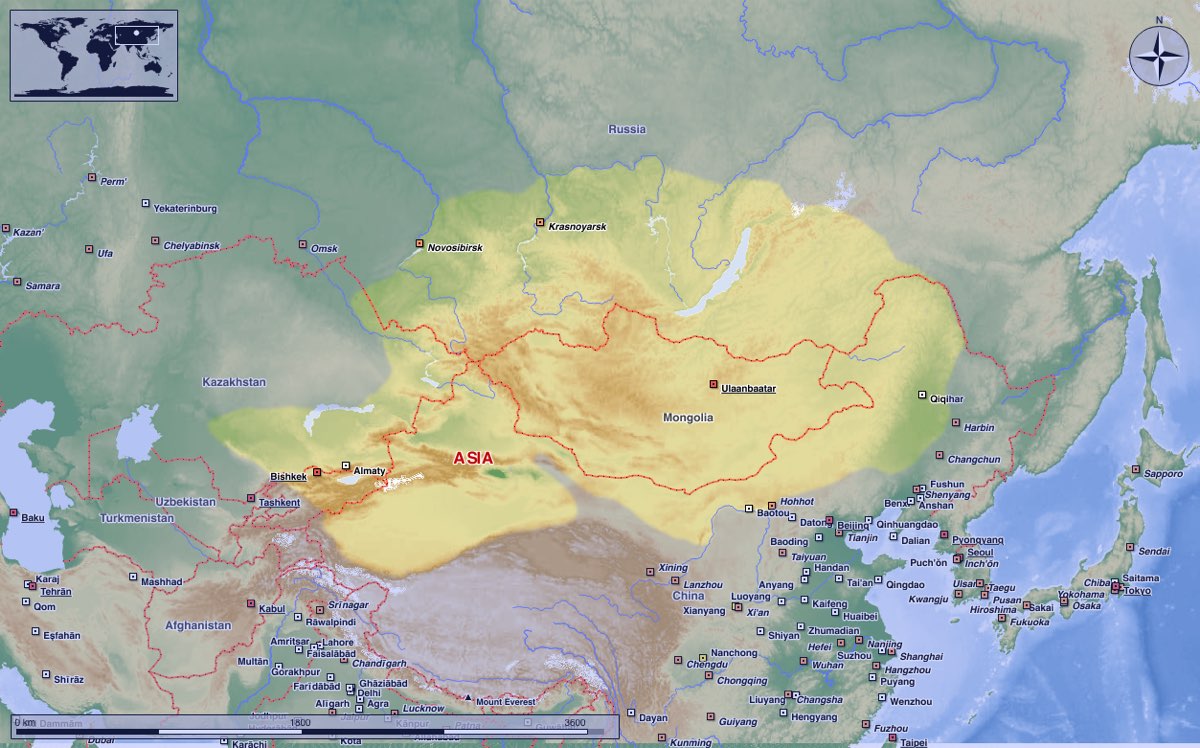
Pursuant to the collapse of the Kok Turk State in the year of 743, the Khirghiz people did not recognise the domination of Uighur Khanate that came to power. They fought against the Uighur people for long years. Although they had suffered from a lot of casualties in a war that was fought with Uighur people in the beginning of 9th century, they killed Uighur Khan in the year of 838 and invaded the Northern section of the Uighur State. Therefore, they established the dominion of a Turkish state with the capital city of Otuken after centuries.
The Khirgiz people repossessed an independent state after centuries (after an interval of nearly a millennium). In the period of this second Khirghiz State that survived for nearly a century, the Khirghiz people recovered and developed in the field of culture. Furthermore, it provided the opportunity for them to use the literary languages and alphabets of their brother states of Kok Turk and Uighur States and thus, they were able to construct their own inscriptions.
However, the regions in which this second Khirghiz State was founded are located within the borders of the Peoples Republic of China and the Chinese government does not give permission for excavations in these regions where most important works of Turkish history are buried. Therefore, the history and the other various scientific branches cannot obtain the data each with the value of a treasure that can be excavated from these regions. If it will be possible to excavate the Khirghiz inscriptions in this region, the information and data pertaining to the Khirghiz people and the history of Turks in the Central Asia in general would be enlarged with more comprehensive and new dimensions. Thus, various unknown characteristics of the lifestyles of Turks for these several centuries will be identified clearly.